

Store brand popularity continues to grow across all US retail formats but no more resoundingly than in the two “cold” departments — Refrigerated and Frozen. Private label is clearly “hot’ in terms of both unit and dollar sales gains in these two huge sections, according to Circana, PLMA’s exclusive data provider.
Refrigerated is the 800-pound gorilla among the eleven departments that Circana tracks. In 2025, total store brand sales were $60.8 billion, by far the biggest section, an increase of 6.1% that was the best improvement among all departments. Total store brand unit sales were 15 billion, a gain of 0.7%. Some 22% of all US store brand revenue last year came from Refrigerated.

In Frozen, store brand dollar sales were $22.4 billion, up 2.4%, while unit sales came in at 4.7 billion, plus 0.9%. Frozen accounted for 8% of all 2025 store brand sales.
Not surprisingly, store brands dominated market shares in “cold.” In Refrigerated store brands held a whopping 36.6% dollar share and 38.4% unit share while in Frozen store brands accounted for a 26.4% dollar share and a 27.9% unit share.
Digging deeper, top performing categories in store brand sales gains in Refrigerated included All other milk (+43%), Baked goods (+27%), Seafood (+21.5%), Meat (+14.6%), Yogurt (13.5%), Side dishes (+12.4%) and Cottage cheese (+10.1%). In Frozen, among leading gainers were Snacks-Dips (42.7%), Sides (+13.2%), Juices (+ 11.6%), Meat (+11.3%), Appetizers/Snack rolls (+7%), Pasta (+ 6%) and Fruit (+3.3%).
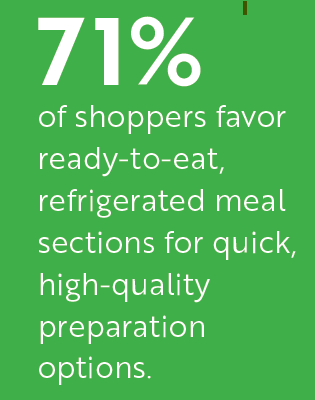
Growth is spurred by convenience and quality. Some 71% of shoppers favor ready-to-eat, refrigerated meal sections for quick, highquality preparation options. The refrigerated, ready-to-eat market is also thriving due to demand for meal starters, sauces, and fresh, highquality ingredients. US consumers increasingly mix fresh and frozen ingredients, with 77% purchasing frozen items for specific meals or days. The trend is supported by advancements in cold chain logistics.
More opportunities for growth lay ahead, particularly in frozen. The US frozen food market is pegged to “reach $163 billion by 2033, a CAGR of 7.7% from 2026 to 2033,” according to Grand View Research. “Powered by a perfect storm of economic, lifestyle, and technological shifts.”
Ethnic frozen food is especially surging, powered by consumer demand for convenient, diverse, and authentic global flavors.
Drivers of popularity include Convenience & Lifestyle: Pre-cooked, “ready-to-eat” ethnic meals cater to busy lifestyles, offering gourmet experiences with minimal prep time; Adventurous Palates: Younger generations (Millennials and Gen Z) are actively looking for globally inspired, authentic flavors, often influenced by social media; Diverse Options: The market is moving beyond basic options to include specialized, high-quality, plant-based, and, in some cases, clean-label or organic ingredients; Premiumization: Consumers are moving away from budget frozen meals toward gourmet or “better-for-you” (organic, cleaner labels) international options; and Retail Expansion: Supermarkets are expanding their frozen aisles to include more niche ethnic products, enhancing accessibility.
“Store brands that lean into the trends with high-protein refrigerated and frozen innovations, clear nutritional messaging and preportioned packaging will be best positioned to connect with these rapidly growing segments,” says Peggy Davies, PLMA President.