Global Retail Brands
  • ABOUT
  • Contact
  • Events
  • Media Kit
  • ARCHIVE
  • ITA@PLMA
Global Retail Brands
  • ABOUT
  • Contact
  • Events
  • Media Kit
  • ARCHIVE
  • ITA@PLMA
SUBSCRIBE
Global Retail Brands
  • ABOUT
  • Contact
  • Events
  • Media Kit
  • ARCHIVE
  • ITA@PLMA
Copyright 2021 - All Right Reserved
Category:

Americas

AmericasEuropeFeatures

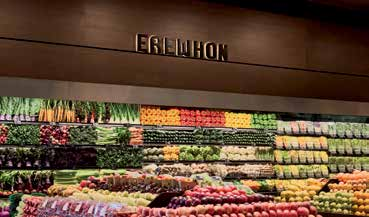
Global Retailers are Building the Next Generation of Power Brands

by Andrew Quinn March 16, 2026

Private label grocery brands have undergone a radical transformation. Once synonymous with bargain pricing and minimal marketing, retailer-owned brands now stand at the center of innovation, customer loyalty, and margin expansion. Across continents, retailers are repositioning private labels as premium offerings, sustainability leaders, and drivers of differentiation in a crowded market.

The shift is not theoretical. Global private-label food sales reached record levels in recent years, driven by inflationary pressure, shifting consumer values, and rising trust in retailers. In the United States alone, private-label food sales hit $282.8 billion, underscoring the scale of opportunity. (Axios)

At the same time, consumer perceptions have evolved: 68% of shoppers now view private label as a credible alternative to national brands, and 69% perceive strong value, according to NielsenIQ. (NIQ)

Yet growth is entering a new phase. Retailers face intensifying competition, slower category expansion in mature markets, and higher expectations from digitally savvy consumers. The question is no longer whether private label matters—but how retailers can excel in the next era of global grocery retail.

Momentum with Maturity

Private-label brands now dominate many global grocery chains. Aldi, Trader Joe’s, Costco, and Lidl have built business models centered on owned brands, achieving exceptional penetration and customer loyalty. In Aldi stores, more than three-quarters of sales come from private-label products, with roughly 90% of SKUs owned by the retailer.

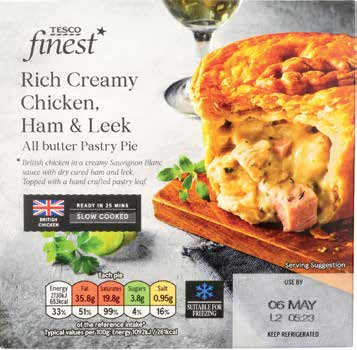
Meanwhile, flagship private brands such as Costco’s Kirkland Signature, Walmart’s Great Value, and Tesco Finest generate tens of billions in annual revenue and are embedded in consumers’ shopping habits.

Top Drivers of Private-Label Growth Globally Include:

  • Rising consumer trust in retailers.
  • Economic pressure encouraging trial of lower-cost alternatives. (Italianfood.net)
  • Retailer control over margins and supply chains. (gsnnews.com)
  • Sustainability and ethical sourcing priorities. (gsnnews.com)
  • Premiumization and health-driven innovation.

However, growth rates are moderating in some regions. Europe’s private-label expansion slowed from nearly 12% in 2023 to under 4% in 2024, signaling market maturity and the need for strategic reinvention.

From Alternative to Power Brand

Private label is no longer a tactical margin lever. For the world’s leading grocery retailers, it has become a strategic platform for growth, differentiation, and long term resilience. Across Europe and beyond, retailers are operating as fully fledged brand owners—controlling product development, sustainability standards, pricing architecture, and customer relationships at scale.

In a period defined by inflation fatigue, geopolitical disruption, and shifting consumer expectations, private label has emerged as one of the most reliable engines of performance in global grocery. Yet success is no longer guaranteed. Penetration is high, competition is intensifying, and consumers increasingly expect private brands to deliver not just value, but purpose, quality, and innovation.

Europe has long served as the proving ground for private label. In markets such as the UK, Germany, Spain, and Switzerland, private label penetration routinely exceeds 40 percent of grocery sales, compared with roughly 20–25 percent in North America. Discounters, cooperatives, and multinational grocers alike have demonstrated that retailer brands can outperform national brands on trust, quality perception, and loyalty.

What has changed is the role private label now plays inside the enterprise. Rather than being positioned primarily as a lower priced substitute, private label is increasingly treated as:

  • A brand portfolio, with tiered value, core, and premium propositions
  • A testing ground for innovation and speed to market
  • A sustainability platform, where retailers can directly influence sourcing and packaging
  • A strategic buffer against supplier concentration and margin volatility

This shift is evident in both discounter led models and full assortment supermarkets. Some retailer examples are:

Tesco – Architecting a Tiered Brand Portfolio

Tesco remains one of the clearest examples of private label as brand architecture rather than category fill. Its multi tier system—ranging from entry level value to the premium Tesco Finest line—allows the retailer to serve diverse income groups while maintaining consistency in quality and messaging.

The Tesco Finest range, first launched in the 1990s, has been continually refreshed with restaurant inspired meals, global flavors, and seasonal innovation. During recent inflationary cycles, Tesco leaned heavily into this structure, encouraging customers to trade within the Tesco ecosystem rather than exit to competitors.

STRATEGIC INSIGHT: Tiered private label strategies protect share during economic stress while preserving margin through premium mix.

Lidl – Premium Within a Discounter Model

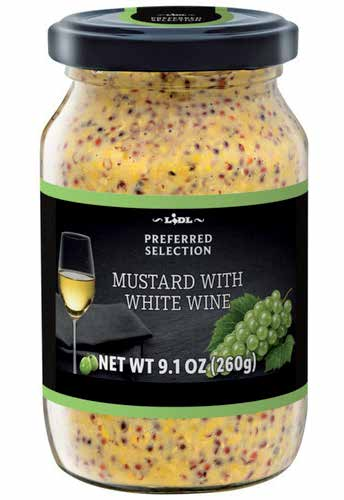
Lidl’s private label success challenges the assumption that discounters must compete solely on price. While the retailer maintains a sharply limited assortment, it has invested heavily in premium seasonal ranges such as Deluxe and Preferred Selection, supported by packaging, storytelling, and culinary credentials.

These ranges are deliberately designed to create moments of discovery and excitement—particularly around holidays—while reinforcing Lidl’s core promise of quality at accessible prices.

Lidl has also used private label to advance sustainability goals, including responsible sourcing commitments and simplified ingredient lists, further closing the perception gap with traditional supermarkets.

STRATEGIC INSIGHT: Even in price driven formats, premium private label can elevate brand equity without undermining value positioning.

Carrefour – Local Relevance at Global Scale

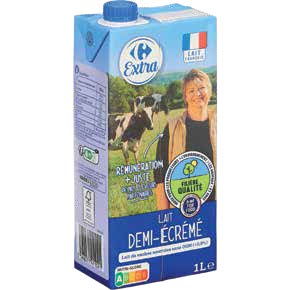
Carrefour operates one of the world’s largest private label portfolios across multiple banners and geographies. A key differentiator has been its emphasis on local sourcing and regional relevance under private label lines such as Carrefour Quality Line and organic ranges.

By embedding local suppliers into its private label strategy, Carrefour strengthens consumer trust while reducing supply chain risk. The approach also supports regulatory and cultural expectations in European markets, where transparency and origin matter deeply.

Why It Matters?

  • Local sourcing improves resilience and regulatory alignment
  • Regional relevance increases shopper trust
  • Scale economics remain intact through central governance

STRATEGIC INSIGHT: Global scale and local authenticity are not mutually exclusive—private label can deliver both when governance and sourcing models are aligned.

Costco’s Kirkland Signature – A Brand Built on Trust

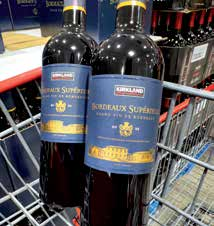
Kirkland Signature exemplifies the private-label evolution from generic to premium. Introduced in 1995, the brand now generates tens of billions annually and accounts for a significant share of Costco’s revenue. (Food & Wine)

Key success factors:

  • Rigorous quality standards that rival or exceed national brands. (Food & Wine)
  • Limited but curated assortments that reinforce value perception. (Food & Wine)
  • Strong supplier partnerships—often with leading manufacturers. (gsnnews.com)
  • Loyalty-driven business model supported by membership economics.

RETAILER TAKEAWAY: Trust is the ultimate currency. Consumers buy Kirkland products because they are Kirkland—not despite the label.

Opportunities Defining the Next Phase

In mature private label markets, growth no longer comes from adding SKUs—it comes from adding meaning.

1. Premiumization Without Alienation

Consumers increasingly expect private label to deliver restaurant quality, health forward, and indulgent products. The challenge is to expand premium ranges without eroding the retailer’s value credentials.

Successful retailers clearly separate tiers through design, pricing logic, and shelf placement—making trade up intuitive rather than confusing.

EXECUTIVE SIGNAL: Premium private label protects margin, but only when it is clearly differentiated from value tiers.

2. Sustainability as a Brand Asset

Private label gives retailers direct control over:

  • Ingredient standards
  • Packaging formats
  • Carbon reduction initiatives

In Europe, where regulatory and consumer scrutiny is high, private label has become the primary vehicle for delivering ESG commitments at scale.

IN PRACTICE: Retailers increasingly use private label to pilot recyclable packaging and simplified ingredient lists before rolling them into national-brand negotiations.

3. Speed and Innovation

Retailers are increasingly outperforming national brands in speed to market. Shorter decision chains and direct supplier relationships allow private labels to respond rapidly to trends such as plant based foods, protein forward diets, and global flavors.

4. Data Led Assortment Optimization

Advanced European grocers are using loyalty data and AI driven analytics to refine private label assortments by region, store format, and shopper mission—reducing duplication and improving productivity per SKU.

“Private label success increases complexity faster than it increases capability.”

Challenges That Require Attention

Brand Fatigue in Mature Markets
High penetration raises the risk of sameness. Without continued reinvestment in design, storytelling, and innovation, private labels can lose emotional resonance.

Supplier Relationships and Regulatory Pressure
As private label grows, retailers must balance margin capture with healthy supplier ecosystems—particularly in Europe, where competition authorities are active.

Operational Complexity
Managing global sourcing, quality control, and compliance across hundreds of private label SKUs demands industrial level capabilities.

RISK WATCH: Retailers expanding private label too aggressively without governance frameworks risk quality dilution and reputational damage.

A Strategic Playbook for Global Retailers

  1. Think Like a Brand Owner
    Invest in long term brand equity, not just short term margin.
  2. Design Matters
    Packaging and visual identity are critical trust signals.
  3. Build Tiered Clarity
    Make value, core, and premium roles unmistakable.
  4. Lead on Sustainability
    Use private label to demonstrate—not declare—progress.
  5. Innovate with Discipline
    Fewer, better launches outperform crowded assortments.

Conclusion: Private Label as the Retailer’s Signature

The most successful global grocers no longer ask whether private label should grow. They ask how it should lead.

Private label has matured into a strategic signature—one that reflects the retailer’s values, standards, and ambition. As global grocery enters a period of slower growth and higher complexity, private label stands out as one of the few levers retailers fully control.

Those who treat it accordingly will define the next generation of global grocery brands.

“The next generation of grocery brands will be owned by retailers, not manufacturers.”

“Private label success increases complexity faster than it increases capability.”

March 16, 2026 0 comments
AmericasEuropeFeatures

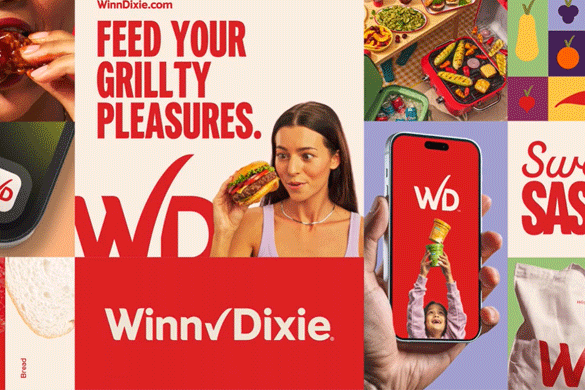
Winning With Winn-Dixie

by Andrew Quinn March 16, 2026

by Maria Dubuc, President MBD

At MBD, our clients are at the heart of everything we do. Their successes feel personal, because we see ourselves as true partners in their journey. That shared sense of teamwork—and mutual respect—is especially evident in our relationship with “The Winn-Dixie Company”

Just a few years ago, The Winn-Dixie Company engaged MBD to serve as the lead design agency and packaging partner for its private brand program. Fast forward to 2026, and the journey has become one of the most rewarding experiences of our careers. Has there been change along the way? Absolutely. But as strategists, problem solvers, and decision makers, we’ve always embraced every opportunity with the same mindset: bring it on.

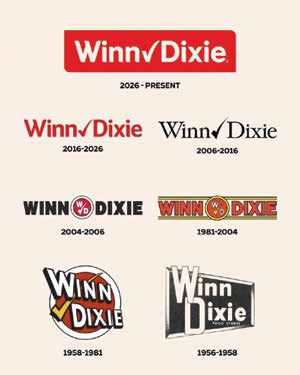
With more than 100 years in business, the
grocer’s history includes several name
and brand evolutions. From Table Supply
to Winn & Lovett to the name we all know
and love, Winn-Dixie. Since the Winn-Dixie
name debuted 70 years ago, its brand has
continued to evolve—shaped by its customers,
its communities and the incredible people
behind the name.

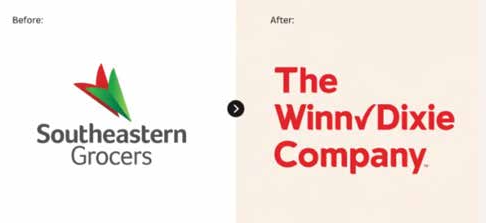
In January of this year, the parent company of Winn-Dixie began its next chapter as The Winn-Dixie Company, reaffirming a legacy more than a century in the making. Let’s take a look at the history of the Winn-Dixie brand.

The Big Announcement

Press Release Jan. 21, 2026 Southeastern Grocers officially became The Winn-Dixie Company in January, boldly presenting its rebrand and uniting under the name generations of families know and trust.

It’s a bold next step for a century-old brand, focused on strengthening neighborhoods, delivering standout value and service and showing up for the communities that have long called Winn-Dixie their hometown grocer. As part of this transformation, the company is also introducing a refreshed Winn-Dixie brand, designed to feel more modern, confident and connected to the way families shop today.

Anthony Hucker, Chairman and CEO of The Winn-Dixie Company, said, “This is a defining moment—more than a name change, it proudly declares who we are and where we’re headed. Winn-Dixie has been part of feeding families and enriching communities for generations. Becoming The Winn-Dixie Company brings a deeply rooted company name behind our shared purpose of empowering people to feed and enrich their communities. We’re investing with intention—opening new stores, refreshing existing ones and elevating the products our customers know and love—while maintaining our commitment to value and quality.”

Developing the Brand, Together

As “The Winn-Dixie Company” new landscape continues to take shape, our partnership with the private brand team grows stronger. Working side by side, we are shaping a cohesive brand strategy that spans the entire private brand portfolio—ensuring every touchpoint reflects clarity, consistency and purpose. Together, we’re not just building brands; we’re creating meaningful connections that support “The Winn-Dixie Company” vision for the future.

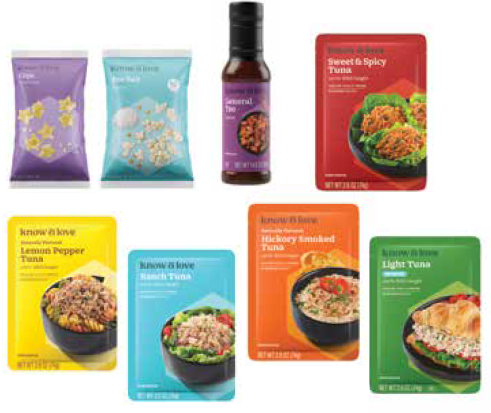
Launched as a “better for you” brand roughly a year before our involvement, Know & Love has continued to gain traction—becoming a familiar and trusted presence in “Winn-Dixie” stores. Through a close partnership, MBD and Winn- Dixie worked together to evolve the Know & Love brand—strengthening brand consistency and elevating its visual expression through custom product photography across 330+ SKUs to date.

Brooke Rice, Vice President of Own Brands for The Winn-Dixie Company, said, “Know & Love represents the evolution of our Own Brand portfolio—vibrant, modern and rooted in transparency. By combining thoughtful design, neuroscience-backed packaging cues and a clear value proposition, we are proving that clean-label products can be both accessible and exciting while delivering stronger sales velocity and higher customer satisfaction. We are proud to see Know & Love resonate with shoppers while earning industry recognition for its innovation, and we are excited about the continued growth ahead as The Winn-Dixie Company moves forward with confidence and commitment in our second century.”

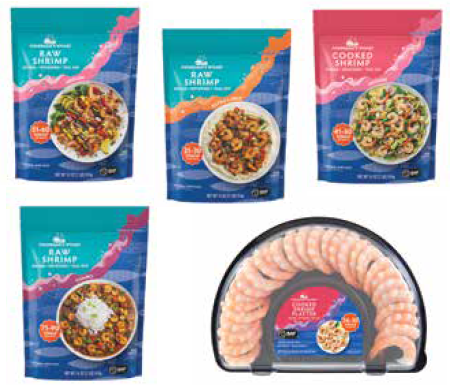
Fisherman’s Wharf

MBD completed a new brand strategy for the redesigned Fisherman’s Wharf portfolio, setting the stage for continued growth and a more cohesive, future-focused brand experience. Account Manager Amy Saad noted, “Building on the original designs, MBD expanded and optimized the packaging across a full range of SKUs—refining callouts, usability cues, and photography to enhance shopability and reinforce freshness, quality, and regional relevance.”

The future is bright— and there’s plenty in store.

As “The Winn-Dixie Company’s” private brand portfolio continues to evolve, new ideas, fresh designs, and meaningful brand moments are on the horizon. Don’t miss upcoming issues of Global Retail Brands for a first look at what’s ahead for this standout retail program.

About The Winn-Dixie Company

The Winn-Dixie Company, based in Jacksonville, Florida, is a trusted neighborhood grocer with deep roots across Florida and southern Georgia. Building on more than a century of legacy, the company is shaping the future of neighborhood grocery through continued store investments, innovative formats and a seamless omnichannel experience that delivers exceptional value both in stores and online. Guided by its purpose to feed and enrich the communities it serves, The Winn- Dixie Company is known for exceptional service and locally authentic stores. The grocer is committed to offering fresh, highquality products and meaningful value through its nationally recognized Winn-Dixie Rewards program. For more information and updates, visit WinnDixie.com and follow @WinnDixie on Facebook, Instagram and LinkedIn.

About Winn-Dixie

Founded in 1925, Winn-Dixie is a trusted neighborhood grocer serving communities across Florida and southern Georgia. A subsidiary of The Winn-Dixie Company, Winn-Dixie operates locally authentic neighborhood grocery and liquor stores, complemented by convenient online grocery delivery. To learn more, visit WinnDixie.com.

Maria Dubuc, President of MBD, leads an expert packaging and design agency known for bringing brands to life on shelf through bold creativity and data driven strategy. With more than 30 years of experience in retail and private brands, Maria translates brand vision into compelling, scalable design. MBD partners with top retailers to develop new brands, evolve existing portfolios, and create clarity across complex private brand programs—supporting portfolios ranging from 1,000 to more than 10,000 SKUs annually.

March 16, 2026 0 comments
AmericasEuropeFeatures

PLMA’s International Council Shares Insight Into The World of Private Label

by Andrew Quinn March 16, 2026

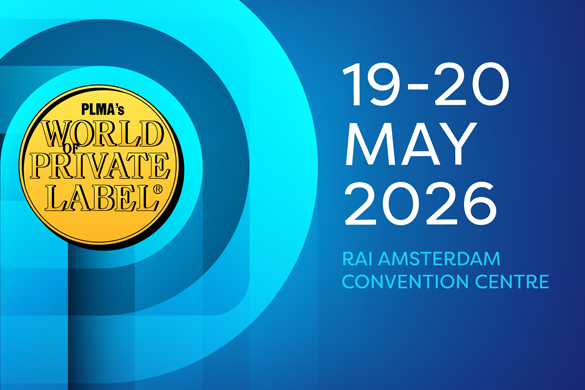
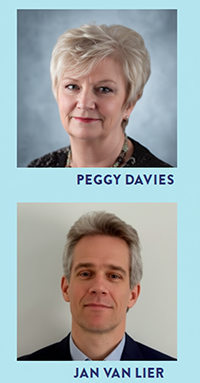
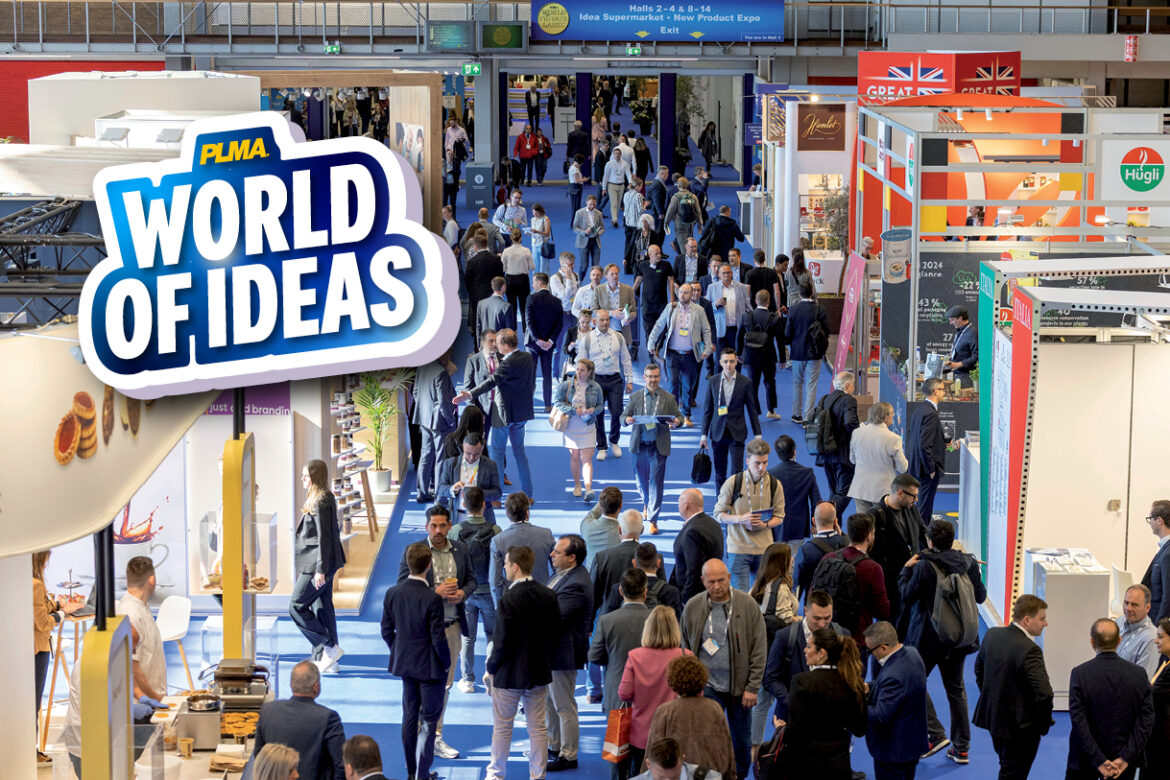
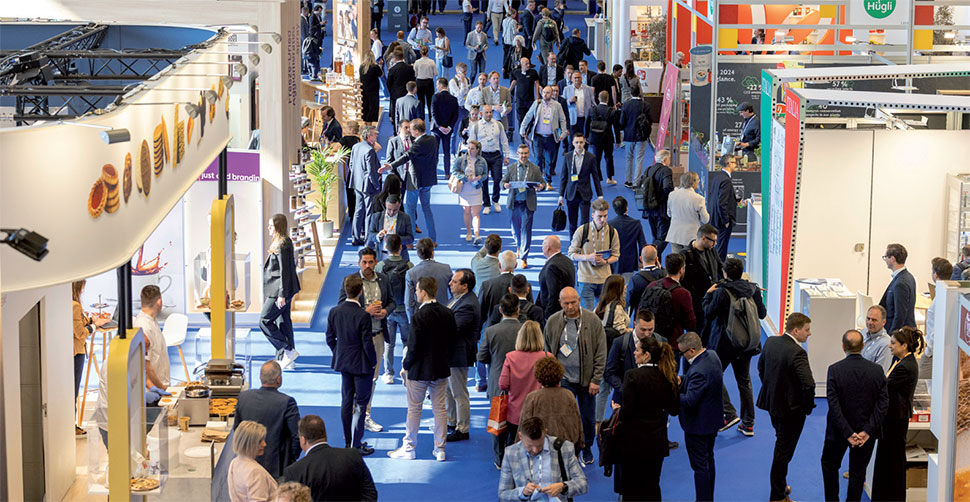
For over four decades, PLMA has supported the global private label industry through insight, collaboration, and trusted connections. The heart of this mission is PLMA’s International World of Private Label Trade Show in Amsterdam, where manufacturers and retailers come together to exchange ideas, share innovation, and strengthen relationships. Ahead of the 2026 edition, we speak with Peggy Davies, President of PLMA and Jan van Lier, Managing Director Trade Shows of PLMA International Council, about what makes the Amsterdam show special.

Understanding PLMA and the Amsterdam Trade Show

Jan: Over these years we have also witnessed the evolution in the industry first-hand, the journey from being seen as cheap alternatives to branded products to becoming a brand in its own right, recognized by consumers and becoming the first choice in their baskets.

For those new to PLMA, what exactly does the association do?

Peggy: For those new to PLMA, we support the private label industry in multiple ways. Beyond our 40+ years of experience and our two flagship events in Chicago and Amsterdam, we help companies stay ahead of market trends, connect with global partners, and discover new business opportunities. Our goal is to strengthen the private label community and drive growth by bringing the industry together on a global scale.

Jan: Over these years we have also witnessed the evolution in the industry first-hand, the journey from being seen as cheap alternatives to branded products to becoming a brand in its own right, recognised by consumers and becoming the first choice in their baskets.

Peggy: Exactly. On top, we are actively in contact with the stakeholders in the industry to stay connected and constantly aware of the relevant needs of the industry.

The Amsterdam trade show is your flagship event. What makes it special?

Jan: What truly sets Amsterdam apart is our deep understanding of private label, not just as products on shelves, but as brands that shape people’s daily lives. The show brings this to life, giving the industry an engaging platform to fully immerse themselves in the world of private label innovation.

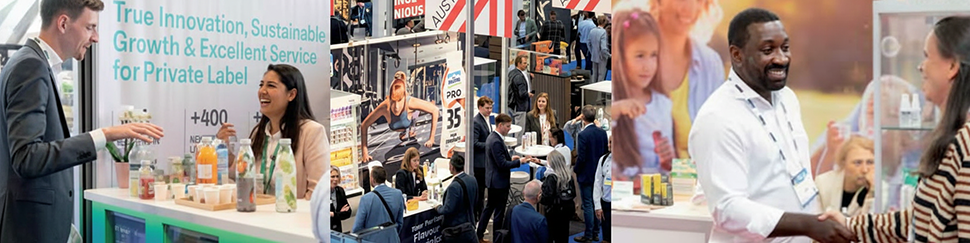
Peggy: Attendees step into a space built on trust and expertise, where business relationships are formed and sustained, ideas are exchanged, information is shared, and innovation is showcased, driving the industry forward. The energy and buzz of doing business there are nearly tangible, making it an inspiring experience for everyone involved.

Trends and Innovation at PLMA Amsterdam 2026

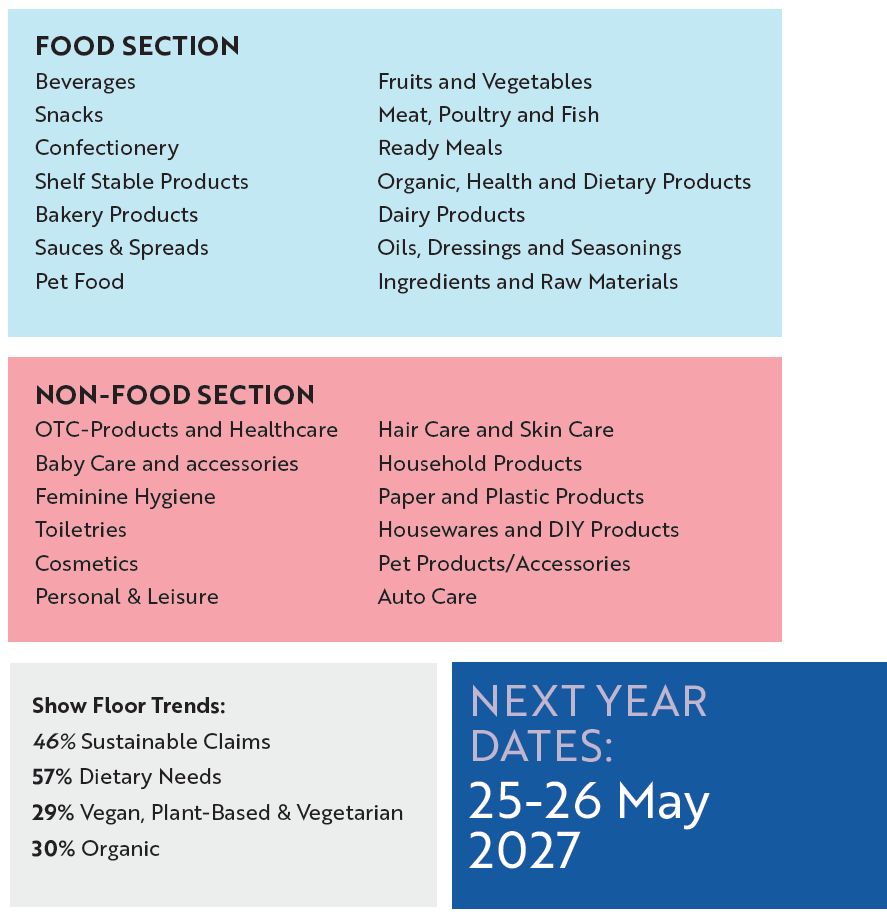
What product trends will visitors see at PLMA Amsterdam 2026?

Peggy: Building on that, transparency really matters now. Consumers want to understand what they are buying, and that’s driving product development in more conscientious ways.

Why is the mix of returning and new exhibitors so important?

Jan: Returning exhibitors provide proven experienced continuity and demonstrate long-term commitment to the industry. They bring established partnerships and reliability that buyers value and trust.

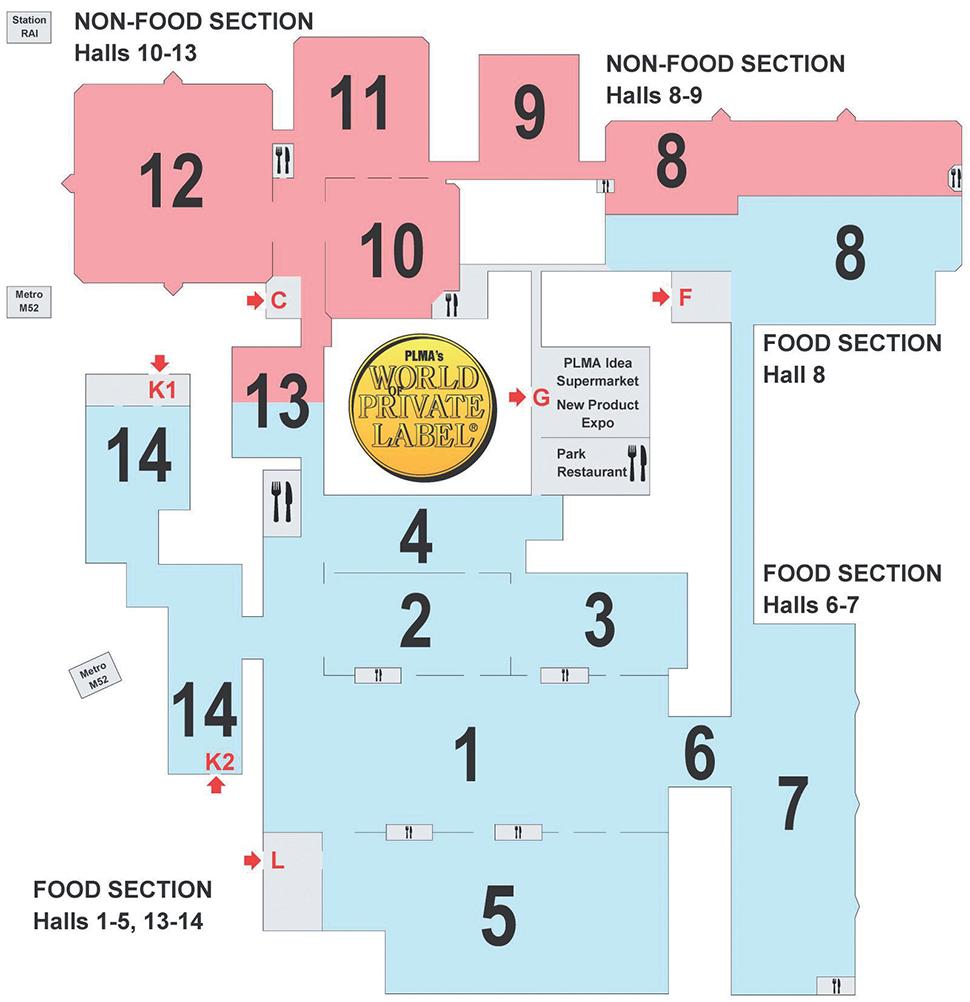
Peggy: Equally important are the new exhibitors, who can bring fresh perspectives and new business opportunities. Together, more than 3200 returning and new exhibitors create the most dynamic and energetic environment possible, at the private label gathering of the year in Amsterdam.

What can visitors experience beyond the exhibition floor?

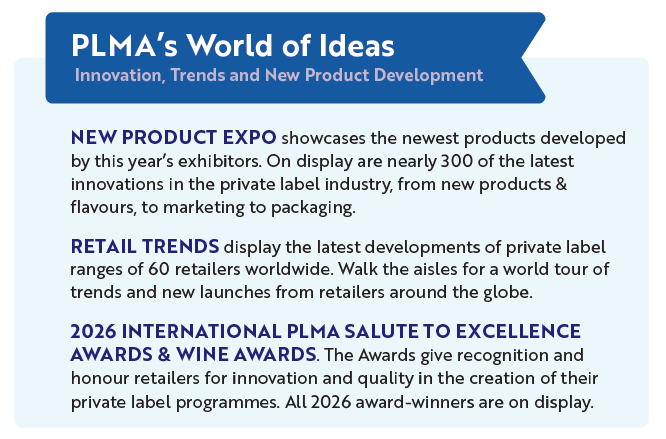
Jan: On Monday 18 May, we offer a comprehensive programme of seminars and workshops covering market trends, consumer behaviour, and industry best practices. Then, as a fixed element and one of the popular attractions, PLMA’s Idea Supermarket that highlights innovation, new product developments, and trends. While the New Product Expo showcases the latest innovations in product development from our exhibitors to meet retailers need, our Retail Trends section give a global perspective on the products and consumer needs found on shelves around the world.

Peggy: We also highlight the very best in private label through our Salute to Excellence Awards, where outstanding achievements in retailers’ private label products are honoured and celebrated. I urge you to visit the area for the total view and state of the industry in product development.

Sustainability and Consumer Perception

How does sustainability come into play at the trade show, and how are private label products adapting to climate challenges?

Peggy: Sustainability has evolved from an optional consideration to a required business necessity. Throughout the show, you’ll see products developed with responsible sourcing, improved production methods, and transparent supply chains.

Jan: Fair trade principles are also playing an important role, influencing all stages of product development, from sourcing and ingredients to packaging.

Peggy: The innovations are impressive. Private label demonstrates real agility in responding to these global challenges.

Has consumer perception of private label changed, e.g. quality versus price?

Jan: Research, including research we have recently conducted, shows that private label is no longer seen merely as a budget alternative to brands. Today, it offers equal, or even better, quality at a more attractive price. While value has always been important to private label, repeat purchases only happen when the quality meets consumers’ expectations.

Peggy: Exactly. Today’s consumers understand that competitive pricing doesn’t mean compromising on quality. It’s about offering intelligent value and enabling consumers to make smart choices.

The Future of Private Label and Collaboration

Why is collaboration so critical for the future?

Jan: The challenges facing our industry such as climate change, evolving consumer expectations and supply chain complexity, require collective action. No single organisation can address them effectively in isolation.

Peggy: That’s why strong partnerships and open dialogue across the value chain are essential. PLMA provides the platform where this can happen.

Jan: Indeed, where manufacturers, retailers, and industry partners can collaborate, share expertise, and drive significant progress together.

Looking ahead, how do you see the future of private label?

Peggy: I see the future of private label as very bright. It has become increasingly important not just as a competitive offering, but as a reflection of values and identity. When retailers develop their own brands, they are communicating their positioning and building consumer trust.

Jan: I agree completely. Private label plays a central role in brand identity for both retailers and consumers. And PLMA operates at the core of this ecosystem, supporting manufacturers, retailers, and partners as they navigate industry changes.

Peggy: While maintaining their commitment to quality, trust, and responsibility, these fundamentals remain constant even as everything else evolves.

Why Amsterdam as the location for this event?

Jan: Amsterdam is the perfect setting for PLMA. It’s a city built on trade and innovation, with a long history of bringing people together from around the world, very well connected by all means of transport. Plus, it’s a wonderful city to visit. After the trade show, you might enjoy a walk along the canals, visit the Rijksmuseum or Van Gogh Museum, or explore the Jordaan neighbourhood.

Peggy: Join us in Amsterdam and see the private label sector at work. It is always inspiring to witness the energy and collaboration as the community comes together.

www.plmainternational.com

March 16, 2026 0 comments
AmericasFeatures

Store Brand Unit Sales in U.S. Continue to Trend Up in 2026

by Andrew Quinn March 15, 2026

Store brand unit sales in the U.S., on the heels of a strong finish in Q4 of 2025, carried that momentum into the new year with a solid 2.3% gain for the period ending January 25, according to PLMA’s research partner, Circana. Store brand dollar sales for the month were also positive, up by 2.3%.

True to its form of the past several years, store brands in 2025 continued to serve as a bright beacon in the overall U.S. retailing landscape—satisfying consumer needs with high quality, value-driven product solutions; achieving, and in many cases exceeding, retailer goals for enhanced marketplace differentiation and performance; and, along the way, establishing new records for annual revenue as well as dollar and unit sales and shares.

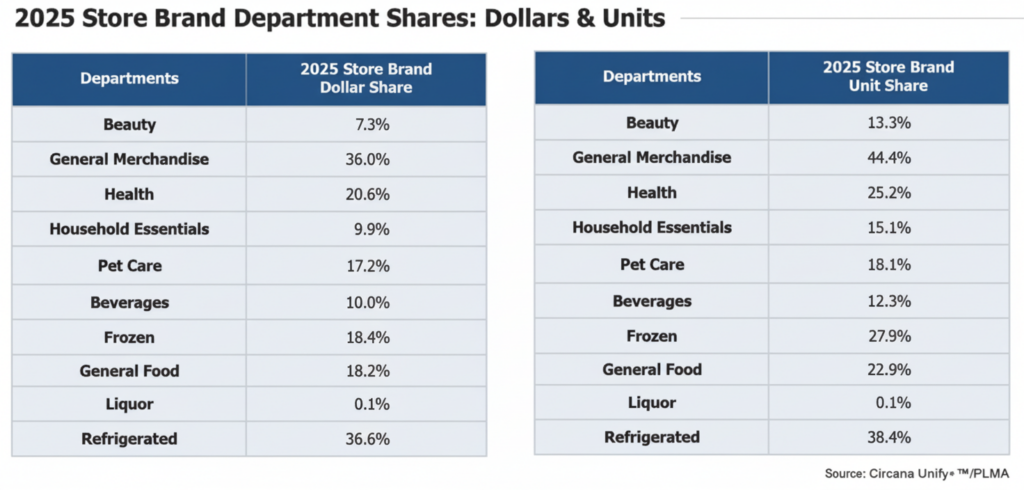
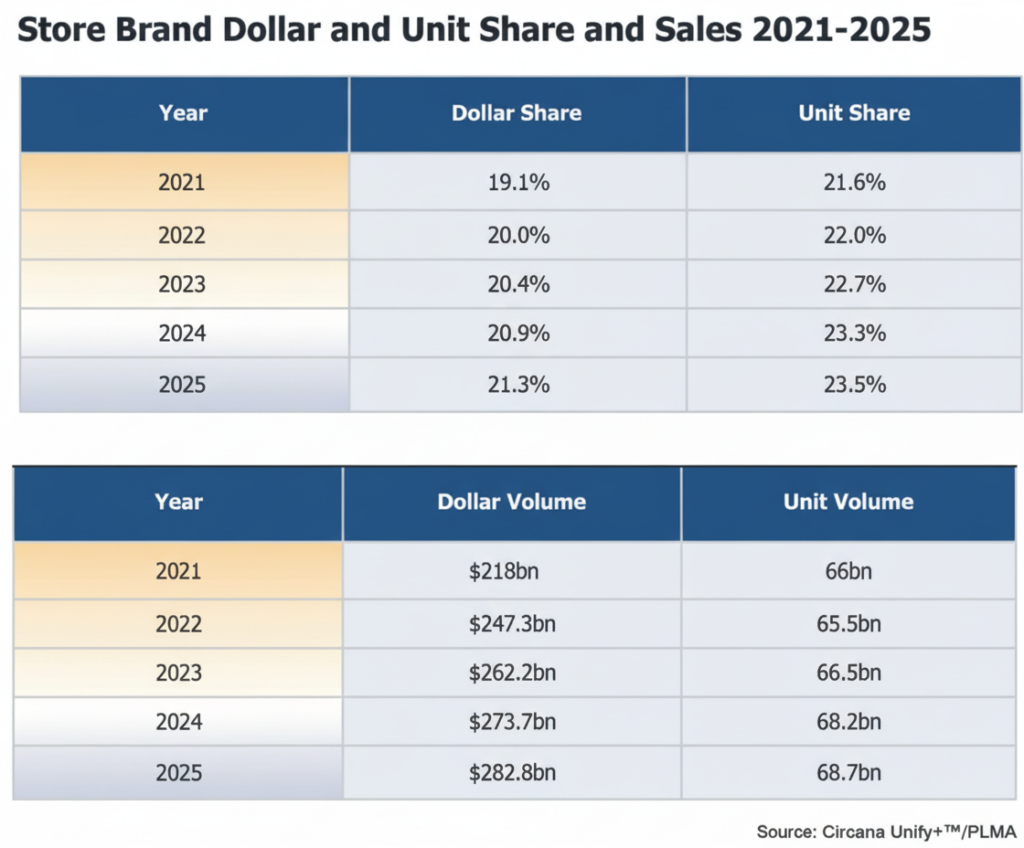
According to PLMA’s 2026 Private Label Report, “A Bright Beacon In U.S. Retail Landscape,” store brand dollar sales in the year increased nearly three times the rate of national brands as the products surged ahead by 3.3% compared to a gain of only 1.2% for their national brand counterparts. Looking at unit sales, the head-to-head difference was comparable. Store brands advanced by 0.6% while national brands declined by -0.6%.

In all outlets, total store brand revenue for 2025 surpassed a quarter trillion dollars for the second year in a row, coming in at $282.8 billion, an increase of slightly more than $9 billion over 2024 and establishing an all-time high in annual volume. Store brand unit volume was up by 434.3 million to 68.7 billion, also setting a new record. National brands lost 1.43 billion units.

Retailers are launching lines to defend and expand their private label reach, according to Circana. Key new initiatives include Kroger’s Smart Way and Mercado, Walmart’s bettergoods, Target’s Deal Worthy and Figmint, Amazon’s Saver and CVS’ Well Market.

“Retailers are doubling down on private labels as a strategic asset for differentiation, brand building and creating emotional bonds with shoppers. Through innovation, pricing and promotion excellence at their grassroots,” says Sally Lyons Wyatt, Circana’s Global EVP & Chief Advisor, Consumer Goods & Foodservice Insights.

“Private brands’ growth reflects a fundamental shift in consumer priorities. Retailer-owned brands are increasingly competing —and winning—on value, quality, efficacy, and sustainability,”

“From the perspective of sales and shares, 2025 was U.S. store brands’ most successful year ever,” declared PLMA’s President, Peggy Davies. “It was a year of achievement across the board, including the growing recognition of the strategic importance of store brands by the trade and consumer media, the investor and consultant community and, most importantly, by the C-suite at America’s retailers. Not coincidentally, it was a banner year for PLMA, as well, highlighted by the bestattended Chicago Trade Show ever and the well-received inauguration of Store Brands Month.”

Some experts predict the gap between the market share penetration of private label grocery products in the U.S. vs Europe will narrow. They may be on to something. Over the past two years, when measured alongside Europe’s top 17 private label markets, American store brands ranked 6th in dollar share increase, +0.8 points, and 9th in unit share gain, +0.9 points.

“Private brands’ growth reflects a fundamental shift in consumer priorities. Retailer-owned brands are increasingly competing —and winning—on value, quality, efficacy, and sustainability,” continued Davies.

In fact, according to Alvarez & Marsal Global, “store brands’ boom is financially driven by highearning, over $100,000 households, 82% of whom are increasing their private label purchases, outpacing lower-income groups…private label growth is a permanent market shift, not merely a temporary response to inflation.”

“Consumer trust and trial show continued acceptance and willingness to explore new private brand products, even in traditionally brand-dominated spaces. All generations are more open to trying new private label products, though younger consumers are most adventurous,” claimed Circana in its 2025 report, From Growth to Transformation: The U.S. CPG Private Label Story.

“Private labels of the future will see broad investment not just from major retailers, but also from regional and mid-sized players. Economic uncertainty will continue to elevate private brands. Quality and innovation will continue to be the focus, while emerging trends in sustainability and localization gain emphasis.”

Once consumers switch to private label, brands face an uphill battle to win them back. By offering highquality products at lower price points, chains reset what shoppers expect for the money. Private labels are sticky, and the longer consumers stay switched, the harder it becomes for brands to reclaim lost ground.

“The ‘value luxury’ trend is the strategic pivot by grocers to elevate store brand quality and design, making them aspirational purchases preferred by high-income consumers seeking efficacy and value. They’re also setting aggressive goals, such as Albertsons aiming for 30% private label share. Aldi’s decision to unify branding under its name emphasizes confidence in its private label quality to carry the store’s reputation. These moves confirm a long-term industry shift where private label is a central pillar of operations,” said research firm Insight Trends World.

PLMA’s 2026 Private Label Report is available online at plma.com. Retailers and PLMA members enjoy 24-7 access to real time store brand and national brand sales data through PLMA’s partnership with Circana’s Unify+.

www.plma.com

March 15, 2026 0 comments
AmericasEuropeFeatures

Made in Italy on American Shelves: Authenticity Matters in Private Label Grocery Sector

by Andrew Quinn November 7, 2025
Continue Reading
November 7, 2025 0 comments
AmericasEuropeFeatures

The 2025 Private Label Trade Show: News, Speakers, Schedule

by Andrew Quinn November 6, 2025

NOV 16-18, 2025 CHICAGO

Continue Reading
November 6, 2025 0 comments
AmericasEuropeFeatures

U.S. Store Brands Continue to Outpace National Brands

by Andrew Quinn November 6, 2025
Continue Reading
November 6, 2025 0 comments
AmericasEuropeFeatures

PLMA Announces 2026 Wine Competition

by Andrew Quinn November 6, 2025
Continue Reading
November 6, 2025 0 comments
AmericasEventsFeatures

Store Brands Month 2026: Social Media and Influencers Driving Momentum

by Andrew Quinn November 6, 2025
Continue Reading
November 6, 2025 0 comments
AmericasEuropeFeatures

PLMA’s 2025 Amsterdam Trade Show: The Biggest Global Event for Private Label, Shaping Future Trends

by Andrew Quinn May 7, 2025
Continue Reading
May 7, 2025 0 comments
Newer Posts
Older Posts
  • ABOUT
  • Contact
  • Events
  • Media Kit
  • ARCHIVE
  • ITA@PLMA

Copyright 2026 Global Retail Magazine / Kent Media Group.

Global Retail Brands
  • ABOUT
  • Contact
  • Events
  • Media Kit
  • ARCHIVE
  • ITA@PLMA