Global Retail Brands
  • ABOUT
  • Contact
  • Events
  • Media Kit
  • ARCHIVE
  • ITA@PLMA
Global Retail Brands
  • ABOUT
  • Contact
  • Events
  • Media Kit
  • ARCHIVE
  • ITA@PLMA
SUBSCRIBE
Global Retail Brands
  • ABOUT
  • Contact
  • Events
  • Media Kit
  • ARCHIVE
  • ITA@PLMA
Copyright 2021 - All Right Reserved
Author

Andrew Quinn

Andrew Quinn

Columns

The Density Dilemma: Always Seek Out The Clearest Voice

by Andrew Quinn February 20, 2014

perry-1

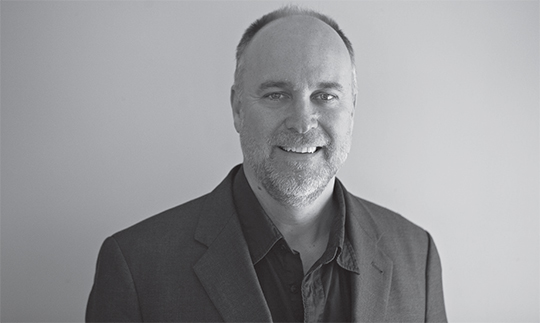
By / Perry Seelert

As consumers, we are exposed to as many as 20,000 different messages a day, and actually see about 250 of them, so how do we make sense of this marketing assault to the senses? If you are a marketer of a brand, or particularly a retailer brand, how do you truly get your message heard amidst this clutter? The old way of thinking from an own brand point of view would be to rely purely on your value message. The thought was, if placed correctly and adjacently at the shelf, you didn’t need to do much else. Just let the price comparison do the heavy lifting, and that is persuasion alone, right? Wrong. To succeed in the new world of retailer branding, you need to think and behave like a brand, and here are four keys to address the Density Dilemma

Be Distinct >>

The more distinct and crystallized you are in your brand positioning, the better you will be, but this is a tough thing for many retailers or brands to rationalize. After all, wouldn’t it be best if everyone loved me and shouldn’t I cast the widest net? I have found that many retailers define their points of difference by claiming “most convenient”, “best service”, “greatest value”, “freshest perimeter”, or “widest selection”. When you claim all of these attributes cumulatively, it becomes too many to be credible, and the result is a vanilla, bland positioning. Seek out the most impactful point of difference and really own it. Brands like Toyota (reliability), Target (fashion-forward) and Disney (imagination) all have oneword equities, and the question is, do you?

Ensure Consistency >>

In defining who you are and the points of difference that make you special, you then have to express it through language, and do it consistently. When we work with retailer or CPG brands, we describe five different dimensions that we call the language of the brand. Each brand should have a visual, verbal, structural (if your brand is packaged), environmental (how and where it lives) and personal (your customer service) language. Most importantly the five dimensions need to be consistent in their overall tone of voice. Apple is a great example of a brand that is synergistic in its equity expression, which could be defined by words like “simplicity, modernity and intuitiveness”. At every visual, verbal, structural, environmental and personal turn, the language of the brand is consistent.

No Gratuitous Density >>

It is key to not try to claim too much in your brand’s positioning, but it is also important not to say too much, especially things that are obvious and extraneous. This just compounds the Density Dilemma for consumers. Wegman’s brands their spring water under their “Food You Feel Good About” banner, and I have always thought this is painfully obvious. Flags, bursts, symbols and call-outs are often more distracting than clarifying. Orville Redenbacher popcorn makes a big point of calling out Gluten-Free, but popcorn by definition is gluten-free, so they are playing to the lowest common denominator in consumer knowledge.

Gut-Check Your Voice >>

As a retailer or retailer brand, the clarity of your voice and the language by which you express it is increasingly important, especially in a world that is not 100% driven by NBE thinking anymore. Gut-check your voice internally and also seek out partners that can guide this marketing exercise within your company.

The language of retailer brands is where we all can improve in the future. Don’t crowd your brand’s voice by claiming too much, and avoid the Density Dilemma at all costs.

Perry Seelert is retail branding and marketing expert, with a passion for challenging conventional strategy and truths. He is the Strategic Partner and Co-founder of Emerge, a strategic marketing consultancy dedicated to helping Retailers, Manufacturers and Services grow exponentially and differentiate with purpose. Please contact Perry at perry@emergefromthepack.com.
February 20, 2014 0 comments
Columns

Reflections on the Future of Retail Brands

by Andrew Quinn February 20, 2014

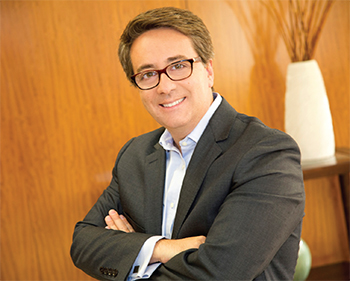
daymon-1By / David Lopes, President & General Manager, International Private Brand Develo pment, Daymon Worldwide
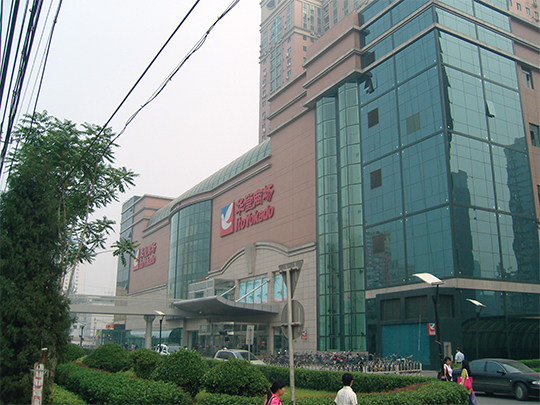
The beginning of the year is always a time to reflect on the past and look forward to the future. When considering retail and the future of brands, what we know and experience today will not be the same tomorrow. The future of retail and brands will be rooted in trust. We live in a world in which institutions collapse and disappoint us, and thus the companies and brands with true staying power are the ones that are able to win the trust and hearts of their customers. This relationship is built not only by creating value and providing safety, happiness and enjoyment to consumers, but increasingly companies and brands are being judged on fair pricing, ethics and overall transparency. These are the matters that will become more critical in the coming years.

This holds true for private brands, as all regions of the world will continue to witness the development of own brands by retailers. This is a fascinating subject, however it has nothing to do with the traditional battle between manufacturer and retailer brands. Private brands will no longer be synonymous with low price and, likewise, industry brands will not have a monopoly on quality and innovation. The future of private brands has much more to do with the capacity to innovate, to offer a quality service linked to the product and sale, and to do all this in a continuous and sustainable way. The world that is emerging is a collaborative world; a world in which ideas and the capacity to implement them will define the leaders, more so than controlling the means of production.

However, producers too are in need of deep reflection. When, for example, we think of China, we think of the world’s factory, given its cheap labor. But we neglect to think that they are one of the most creative and flexible people in the world and that in the next 30 years they will, through internal economic growth, “lift” 300 million consumers into the middle class, equivalent to the population of the USA. It is a middle class which craves food security, and millions of producers with growing awareness that they will have to adopt rigorous brand management principles if they want to not only survive, but succeed, both domestically and internationally.

Another profound revolution shaping our interaction with brands is the way we relate to and influence others. Information is being made available to us without intermediaries. We are all writers and editors, spectators and protagonists. Throughout the world there is growing concern on the part of producers and retailers to incorporate this new behavior into their strategies. The challenge that lies ahead deals with owning the responsibility and the consequences of linking brands and companies to the consumer; knowing that he has a voice and an opinion and that he can use it in a more powerful way than ever before to either recommend or criticize.

So, what else does the future of retail hold? I see a scenario of continued consolidation by retailers, mainly in markets where the concentration is still not very high, and I see another phenomenon which is for me by far the most interesting and which is related to the attempt to discover new concepts, new formats, new channels. Half the world is trying to reinvent the traditional hypermarket. The other half of the world is testing online concepts and transforming supermarkets into a hybrid between a restaurant, a market or a café…I am sure that in the next five years we will see the appearance of new retailers and brands which will be successful but which we have not heard of yet.

February 20, 2014 0 comments
Europe

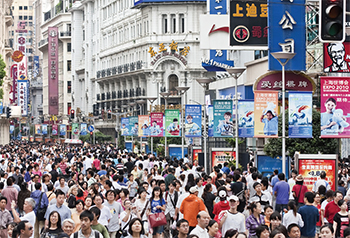
Has China become too hard to crack for international retailers?

by Andrew Quinn February 20, 2014

planet-1

By / Yujun Qiu, Retail Analyst, Planet Retail

Continue Reading
February 20, 2014 0 comments
AmericasFeatures

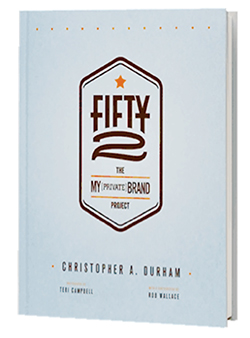
The Fifty2 Best Private Brands in the U.S.: Christopher Durham Discusses His New Book

by Andrew Quinn February 20, 2014

chris-1By / KIM JUSTEN

Continue Reading
February 20, 2014 0 comments
Features

Indonesia: Pay Close Attention

by Andrew Quinn February 20, 2014


By / Kathryn Sloane, Director of Growth, APAC, SGK (Singapore)

Continue Reading
February 20, 2014 0 comments
Features

Private Label Market Overview – Pacific Rim

by Andrew Quinn February 20, 2014

asia-2By / Tom Prendergast, Research Director, PLMA


Continue Reading
February 20, 2014 0 comments
EuropeFeatures

Private Label Frozen Food 2014

by Andrew Quinn February 20, 2014

wabel-1

Continue Reading

February 20, 2014 0 comments
Features

Christopher Durham Named Vice President of Retail Brands at Theory House

by Andrew Quinn February 11, 2014

myth-1

Continue Reading

February 11, 2014 0 comments
EuropeFeatures

PLMA’s 2014 Roundtable Conference Focuses on Increasing Private Label Profits

by Andrew Quinn February 1, 2014

plma-round-table26-27 February in London

Continue Reading
February 1, 2014 0 comments
AmericasFeatures

H-E-B Breaks Out As America’s Sole Cross-Border Supermarket Chain

by Andrew Quinn January 26, 2014

hebBy / DAVID MERREFIELD

Continue Reading
January 26, 2014 0 comments
Newer Posts
Older Posts
  • ABOUT
  • Contact
  • Events
  • Media Kit
  • ARCHIVE
  • ITA@PLMA

Copyright 2026 Global Retail Magazine / Kent Media Group.

Global Retail Brands
  • ABOUT
  • Contact
  • Events
  • Media Kit
  • ARCHIVE
  • ITA@PLMA