 By / Koen de Jong, Managing Direct or at Internati onal Private La bel Consult (IPLC)
I once met with a manufacturer who shared with me how pleased he was to have successfully renegotiated his contract of supply at a major retailer. The product in question was private label pasta sauce. Unfortunately, to respond to the price target as set by his client he had slightly modified the recipe of the product to make it cheaper. As this was done in all openness and in collaboration with the retailer there were no hidden agendas.
I was reminded of this encounter as I recently visited a private label trade show where I met with a Sales Manager of an Italian pasta sauce manufacturer. The man was full of passion about his products produced in Calabria, the south of Italy. He proudly elaborated on how the geographic location and the close connection between the production plant and local farmers give to this family run business the opportunity to carefully select sun ripened vegetables, harvested at the peak of flavor. Using the most natural and fresh ingredients are the first step towards tasty recipes rich in flavor and nutritional properties he explained.
Raw materials processed in small batches result in products according to Italian tradition, without using preservatives and colorings. It will not surprise you that most of his products ended up in the market as premium private label products all over the world at prices superior to the local national brand in most of the cases.
Being a food lover myself (in fact I would never buy pasta sauce, I rather make it myself), I really enjoyed talking with this man, fueled by passion about his products. I shared with him the anecdote as described above and asked how he would respond if this would be the only option to keep a private label contract. His answer will not surprise you: he would never do such a thing.
As he sensed my fascination he went on by explaining that he was always very open about this topic with his retail clients up front. If vegetables of the required quality would not be available, his company just would not produce. As a result there could be limited availability to supply. However, we went on, his clients understood and accepted. One retailer in the United Kingdom even educates its shoppers almost proudly with small panels on-shelf stating ’unfortunately we are temporarily out of stock as our supplier has limited availability of quality ingredients’.
Those readers who read my columns on a regular base will understand why I believe this is the way forward for private label.


By / Perry Seelert
Simplicity and things that are simple are embraced by consumers today, and it is no wonder why. Literally everyone feels his or her life is too hectic, overwrought by schedules, overrun by trying to achieve work-life balance, overtaken by an array of products that are not intuitive and foods that are too complex.
Today, less is truly more, and the consumer seeks simplicity at virtually every turn. For retailers and FMCGs that are research-driven and looking to uncover consumer desires, frustrations and beliefs, the need for simplicity is seen in their qualitative focus groups, and many have taken it to heart.
My observation within retail is that many retailers have already latched on to this consumer truth, and they are saying it quite literally in their marketing and brand nomenclature. But bringing “simplicity” or “simple” to life can be more than just saying it and pasting it overtly within your brand naming.
Just look at the “simplicity”, “simple” and “simply” branding rage over the last couple years within retailer brands.
Aldi just launched “Simply Nature” and Target just restaged “Simply Balanced”. Stop & Shop and Ahold USA just launched “Simply Enjoy” and Kroger launched “Simple Truth”.
And let’s not forget “Simply Less” (Coles Australia), “Simply Valu” (Cash ‘n Carry), “Simply Right” (Sam’s Club/ Walmart), “Simply Nourish” (Petsmart) and Simply Chardonnay (Tesco). Please don’t write me if you identify another, as these are just the ones I have seen.
The FMCG brands are no exception here, with Simply Orange, Pillsbury Simply, Simply Organic, Keebler’s Simply Made and many others. It is “Simply” too much!
We could probably have the same conversation about the words “honesthonestly” and “basic-basically” too, but we will leave that for another day!
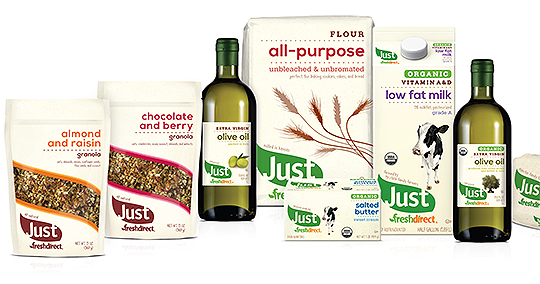
The retailer and own brands of the future don’t just follow branding trends, they lead them and exploit the idea beyond just the brand name, and what it says. Ikea is a retailer that is built on simplicity, yet rather than it translating just to what they say, it comes to life through their packaging, materials, and most of all through their step-by-step instructions. Consumers’ heads spin when it comes to complex instructions where there is always a part or step missing, and Ikea leveraged that throughout their whole product strategy.
Nest, which was just purchased by Google, is brand that is also built on a beautiful simplicity, whereby mundane products like smoke detectors and thermostats don’t have to be such ugly anchors in the home. Their simplicity is ringing true through the product’s design, and it is no accident that Google, a brand also echoing simplicity, was the purchaser.
Simplicity can be executed and come to life at retail through various ways – through product assortment at shelf, at the in-store checkout, and through e-commerce. The idea of simplicity is still one to be leveraged, through retail and through retailer brands, but you don’t necessarily have to embed it into your verbal language so literally. You will be better to give it meaning in many more ways in the store that your shoppers and consumers value even more than the name itself.
Perry Seelert is retail branding and marketing expert, with a passion for challenging conventional strategy and truths. He is the Strategic Partner and Co-founder of Emerge, a strategic marketing consultancy dedicated to helping Retailers, Manufacturers and Services grow exponentially and differentiate with purpose. Please contact Perry at perry@emergefromthepack.com.
 By / Richard Kohn
Even though the economy is improving and unemployment is declining, figures show that the growth of private label and retail brand purchases continues. CPG brand managers who have been telling their bosses (and shareholders) during the recession that volume will pick up again once the economy turns have to find a new excuse for the failure of their marketing budgets to capture the imagination (and share of pocket) of consumers.
The truth is there’s no way back. Private label share, captured during the downturn will not be easily given up by retailers – and for good reason. As a retailer, private label (be it traditional retail branded, tiered assortments or venture brands) are very seductive. And what’s not to love?
Shelves filled with products that sell in very high volumes promoting the strength of the retail brand, delivering significantly higher margins and utilizing the marketing spend of big brand manufacturers to pull growth in the category. For retailers, it’s the perfect storm… and that’s before we even consider the competition amongst manufacturers clamoring to supply these ever increasing sales volumes.
It’s not just a great deal for the retailer. Our consumers benefit massively through high quality alternative products which are often more innovative and always offered at a lower price.
So far, so good. This might appear like the start of a manifesto for all retailers to forsake CPG brands and go their own way. There are successful examples of retailers that have: Marks & Spencer, Waitrose (UK), Hema (The Netherlands), Mercadona (Spain) – before we even start to consider the discount powerhouses of Lidl, Aldi and Jeronimo Martins, however, even these chains understand that there is a place for big brands.
As retailers we appreciate that we cannot have it all our own way. We do need the big brands with their global marketing budgets to develop and grow the categories in which we offer our own brand products, and while there is short term an attraction of loading shelves with our own products we all know this is not sustainable long term.
We need the brands to survive and to be strong. We need them to sell products with premium pricing and create consumer demand through their marketing campaigns. We need them to have space on our shelves so that consumers have real choice when they shop in our stores.
Without their developments, innovation and investment there would be significantly lower overall category growth from which we benefit.
Operationally, it’s a challenging balance to achieve. Exactly how much of our ‘real estate’ do we give to the developer and how much do we retain as land owner. Seductive as it may seem, the old maxim still stands. It’s much easier to get products on to the shelf than off. So beware the seductive private label temptress, unless you are careful, she’ll lead you astray.
Richard is an expert in global marketing and an acknowledged strategic brand leader. He currently heads the private label division at one of the largest retail pharmacy groups in Europe. He’s held senior management positions in A brand CPG companies and led international marketing and strategy teams across CPG, consumer durable and business services companies. He’s also the European client partner for a leading brand excellence training institute which delivers brand and communications courses to Fortune 500 companies. Richard is dedicated to bringing the discipline and science of brand marketing and marketing communications to private labels, empowering them to cultivate critically essential marketing management competencies to lead them to build leadership brands. richardkohn@gmail.com

By / David Lopes, President & General Manager, International Private Brand Development for Daymon Worldwide