


When You Look at the Entire Retail Landscape, Who Has Created the Most Memorable, Comsumer-Loved and Innovative Product Ideas in History?
Retailers’ own brands have advanced in every possible way, through product strategy, better insights, more thoughtful branding and design strategy, and how they are embedded into an overall differentiating intention and vision. They have evolved so much that consumers think of them differently over the last 40 years, from “spurned-to-loved”.
The paths for own brand success have sometimes differed amongst the top retailers, but at their root and at their core, they have started with unique products. Products (sometimes growing more broadly into brands) that have a magnetism, uniqueness and a form-fitting DNA that amplifies who the retailer is and what they excel at. They are sought out by consumers and even serve as destinations for retailers, with an attraction that becomes part of the retailers’ identity.
So, which of these iconic own brand products and brands stand out from the rest? Which ones are the most timeless, the most enduring and the most alluring? Ok, here it is, my version, as controversial and argued as it might be, of the Top 10 most iconic of all time, and it starts with Costco.
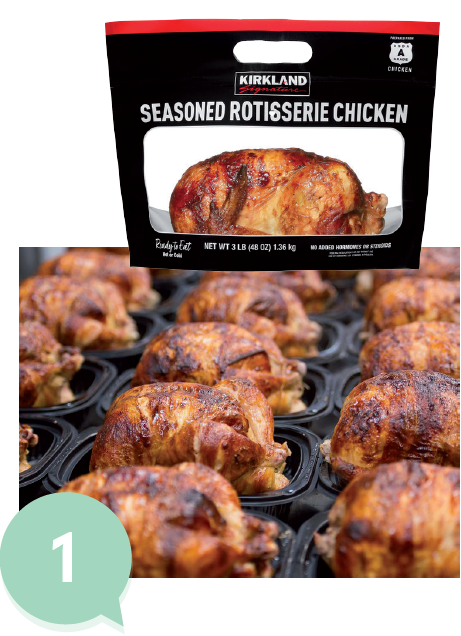
Costco’s Kirkland Signature Rotisserie Chicken
Costco sells 300 Kirkland Signature chickens a minute worldwide, and over 157 million in 2025, and they LOSE between $30-$40 million a year on this destination product as a loss leader.
At $4.99 for a seasoned and cooked 3 pound chicken it is the best value across retail for a comparable item, and the truth is that there is no comparison. Other supermarket rotisserie chickens are more like 2 pounds and $7.99 (Kroger Private Selection 32 oz).
Costco is vertically integrated to produce their chickens, with a 400,000 square foot processing plant they opened in 2019 to better manage their production and specifications. It is also horizontally integrated in that any unsold chickens are used as ingredients for Kirkland Signature dishes like salads, soups and more.
It is a destination. It is branded as an own brand, and other retailers have copied this strategy. It is unique because of its size and value. It lives as its own attraction and magnet in the rear of the club. And, it is bought universally, averaging at 1.9 chickens per member per year. Kirkland Signature represents about 17% of all rotisserie chicken sales in the U.S.!
A legendary and iconic own brand product via every conceivable metric, synchronous with the “value DNA” that Costco exudes.

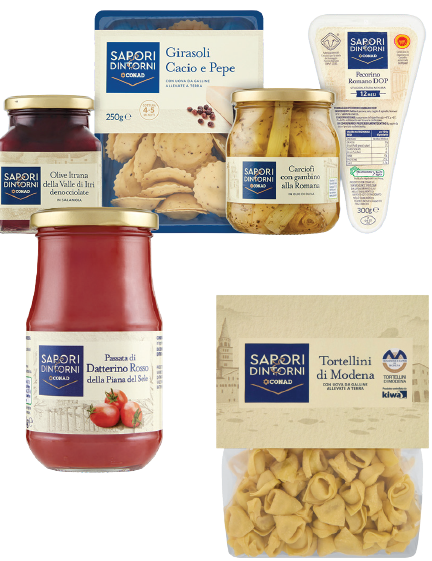
Conad’s “Sapori & Dintorni” Brand
Italian foods in many countries effectively get clumped together as one, slandered as an amorphous entity, and not appreciated for their highly geographic and territorial uniqueness. Some retailers, restaurants and consumers may go so far as to distinguish Northern versus Southern Italian cooking, but with 20 distinct culinary regions in Italy, the food is really individualized by not just region, but even by the town itself.
Sapori & Dintorni (which translates literally as “flavors and surroundings”), a premium brand within Conad’s own brand range, is meant to highlight Italy’s regional food specialties and geography.
The brand was launched in 2001 and now consists of over 420 Italian, geographically-specific products, and became so distinctive for the largest supermarket chain (with annual revenue of 21.8 billion euros) that they launched Sapori & Dintorni stores in 2010 which you can now see in Florence, Milan, Naples, Pompeii and Bologna.
This is an own brand portfolio that has been thoughtfully crafted and is inextricably linked to Conad and the Italian way of thinking. Iconic in every way.
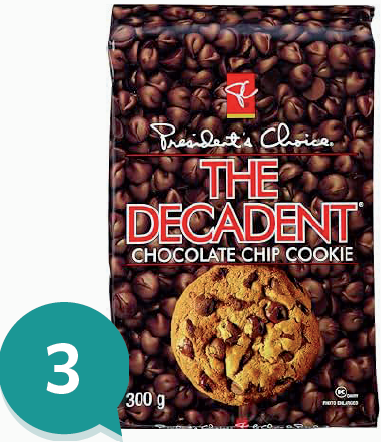
Loblaw’s President’s Choice and The Decadent
While the President’s Choice brand debuted in 1984, created by the mastermind and retailing guru Dave Nichol, the Decadent Chocolate Chip cookie didn’t see its way to shelves until four years later.
The idea was really simple but beautifully strategic in showing the product benefits. Nabisco’s Chips Ahoy was the #1 selling cookie in Canada but was painfully dry and unsatisfying in so many ways, even though it was successful.
With Dave, bigger was always better, and he knew that it was something the consumer could palpably understand.
- Bigger focus on the chocolate chips, the hero ingredient, with vivid visual language encompassing the pack.
- More chocolate chips than any other cookie (39% by weight)
- Made with real creamery butter, not vegetable oils.
- Powerful, imaginative name that said it all
– THE DECADENT
This was the essence of a perfect own brand product – differentiating, targeting a major brand and offering something that was better quality at a value (the Costco formula today) and being unabashedly proud of it. Own brands never had seen this type of innovation so proudly communicated.
The Decadent became so iconic and loved within Loblaw that it eventually was extended more broadly within the cookie category and beyond (the perimeter, frozen, carbonated beverages and more).
A wall-to-wall iconic giant at Loblaw, and part of own brand lore forever.
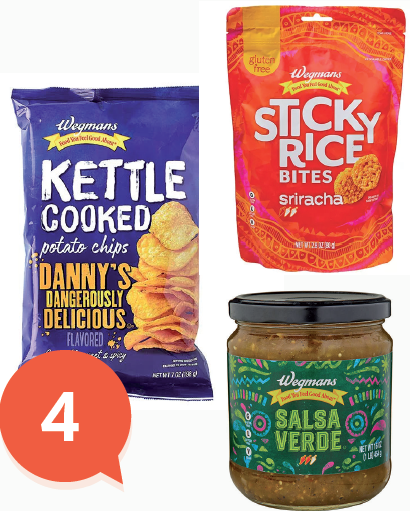
Wegman’s Food You Feel Good About
Natural and “free-from” products used to be thought of products the consumer would reluctantly embrace…. devoid of the ingredients that make something taste good. Natural, yes, but at the same time sterile and uncraveable. They were adorned with pallid branding that didn’t inspire you to purchase these foods, and they were in fact, more expensive than their big CPG (and sometimes artificial) counterparts.
Wegmans turned this branding attitude on its head when they launched Food You Feel Good About in 1991, an idea conceived by their now CEO Colleen Wegman, who really foresaw a more conscious consumer. Notably, though, the brand essence had a positive tonality and one that heralded “great taste” first with the parallel benefits of nothing artificial.
Food You Feel Good About is not stuffy, it is not pretentious, it is not puritanical like other “free-from” portfolios you see. Within the line there are products like Danny’s Dangerously Delicious Kettle Cooked Chips (no trans-fat) paying homage to their Chairman. This is a portfolio that is not puny and penalizing.
And just this year their entire Bakery became 100% Food You Feel Good About – all products sold under this banner are now free of artificial colors, dyes, flavors and unnecessary preservatives.
And long before many retailers, Wegmans eliminated potassium bromate from their bakery products – all their flour is unbromated (a commercial ingredient that strengthens dough).
Wegmans has always been ahead of their time, and Food You Feel Good About is a brand with real equity, meaning and true appetite appeal (along with being about clean ingredients).

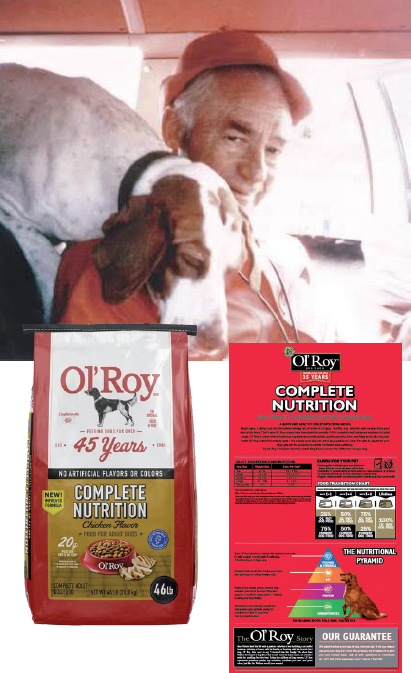
Walmart’s Ol’Roy Dog Food
With Sam Walton and his style of leadership, things were personal. He was one of the first retail leaders in the U.S. to call his employees “associates”, and he believed that the way leadership treated associates would translate to how they would treat their customers.
Ol’ Roy was also personal for Sam, created in 1981 and named after his own English Setter bird dog who would even accompany him to visit Walmart stores. It is one of the most recognized dog food brands in the U.S., exclusive to Walmart, and became the #1 dog food seller in the early 2000’s (topping the Pedigree brand at the time).
The premise behind the brand is straightforward – dependable quality at a value, simplicity and reliability. Ol’ Roy says that one of its principles is “feeding a dog shouldn’t be complicated”, and today it is almost the anti-premium brand in a category that has a lot of sophisticated science driving it.
It may not be sexy, but Ol’ Roy is hugely successful through its accessibility and bandwidth. An exclusive brand voice at over 5200 stores and 280 million visits per week.
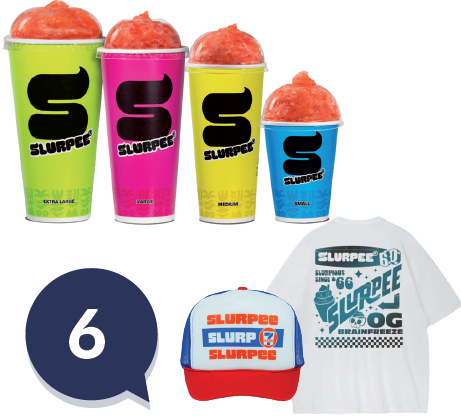
7-Eleven’s Slurpee
It was the 60th anniversary of the Slurpee last July, and this drink is one of the most universally loved with over 7 billion sold (and it happens to be an exclusive brand).
Slurpee is an iconic own brand and product in a number of ways:
- The name itself is so sensory, and it palpably tells you this is no delicate sip, it requires a death-defying inhalation and SLURP.
- The unique spoon-straw that helps you scoop up the slush at the bottom of the cup (with limited edition brain freeze straws, hard candy straws).
- The 300+ creative flavors over time
- The limited-edition cups, with an extra-tall 93 ounce birthday cup.
- The brazenness and awesomeness of a Slurpee is just fun, and it is not for the faint of heart. It is unapologetic in its indulgence.
With over 12,000 exclusive locations for a Slurpee, it is one of the more ever-present and legendary own brands in history. Who would have thought it started as just a happy accident? Invented in 1958 when the soda machine in a Texas Dairy Queen was broken, the owner moved the soda pop to the freezer to keep it cold. He sold the frozen cola slush and it became a big hit, so much so that he coined his newfound invention ICEE. A local Dallas -area 7-Eleven manager saw the idea, brought it back to corporate (who liked it), and in 1965 they bought 3 ICEE machines, rebranding it as the SLURPEE in 1966.
Slurpee has its own official day, July 11th, and it has tons of merchandise for all of its aficionados to wear and promote. It truly is a cultural icon, with its own “Dance The Slurp” radio jingles, movie parodies in The Simpsons, its obsession in Stranger Things, and a real connection to pop culture since the mid-1960’s. Slurpee is mind-melded into 7-Eleven’s retailing fabric, and one of the most notable own brands in history.

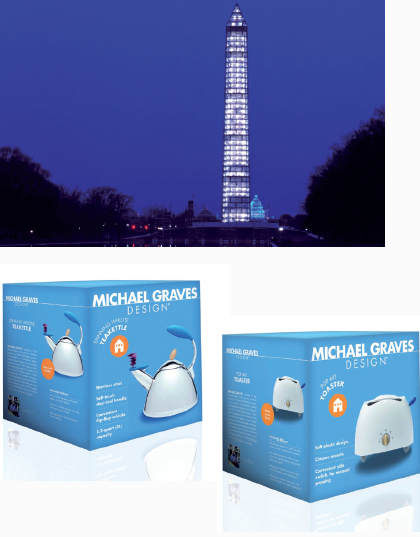
Target and Michael Graves’ Tea Kettle=
While Target officially became known for modern design and fashion in 1999 with their “Design For All” campaign, and cemented its nickname as Tar-zhay, it was a couple years before when they had hired renowned designer Michael Graves in a project to design temporary scaffolding for the Washington Monument restoration. Target was opening its first store in the Washington DC area and wanted to make a major splash in the region. Graves’ idea was to make the scaffolding beautiful and not an eyesore.
The Monument restoration prompted Target to start a design partnership with Michael Graves more broadly, a collaboration that redesigned over 2000 exclusive products throughout the store.
The flagship item in the 1999 Michael Graves’ 150 product line launch was the Spinning Whistle Tea Kettle for $34.95, an adaptation of the iconic tea kettle he had designed for Alessi years before. From toasters to tea kettles to all types of home décor, Michael Graves really drove the modern design image for Target for the next 15 years.
While Target has had many high-profile design collaborations with over 175 people including Isaac Mizrahi, Sonia Kashuk and Alexander McQueen to pioneer their affordable luxury image, it is Michael Graves that was the most memorable, productive and iconic of them all.
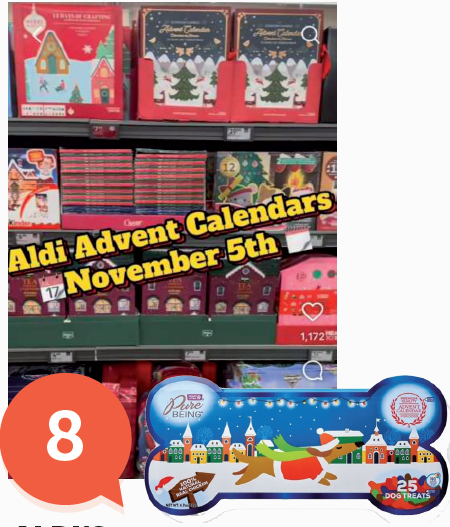
ALDI’S Advent Calendars
While ALDI has almost 5000 limited edition products through their ALDI “Finds” each year, there is probably no other that attracts such a cult-like following as their series of Advent Calendars that are launched annually in early November. But it doesn’t stop with just one calendar, there are multiple themed calendars:
- Cheese
- Wine
- Tea
- Chocolate
- Scented candles
- Pet treats
- Puzzles
- Hot sauce
- Coffee
- Co-branded (Pokemon, Disney princesses, Lego)
In over 13,000 ALDI stores this is a worldwide phenomenon, that also has social media’s attention announcing what calendars to expect and when they will arrive. When a retailer can get this type of buzz around their own brands, and this type of display value (calendars that are plastered within millions of consumers’ homes for the entire month of December), you truly have created a product that is a destination. While there are many other retailers with their own advent calendars, it is ALDI that rises above the rest with their creativity and scale, and this is why they are in the Top 10 most iconic.

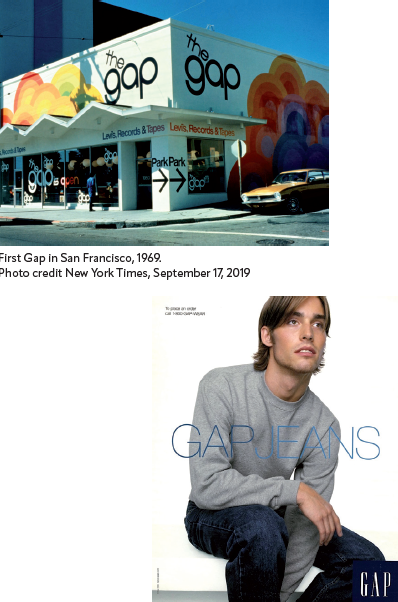
Gap Jeans
In the late 1980’s Levi’s accounted for about one quarter of The Gap’s entire sales and was their #1 selling brand. Yet there was one, glaring problem. Even with Levi’s brand equity and power, it didn’t differentiate The Gap, and it didn’t provide uniqueness to the store’s experience, not to mention margin to the bottom line.
The Gap, who had about 1100 stores at the time, was essentially beholden to this monstrous brand and really had no leverage over it. With their over 3000 stores today, and with the Gap brand being the only brand they carry today, this prevalence of Levi’s in their stores is almost unthinkable. Yet this was the strategic dilemma they confronted.
In 1991 they made the boldest decision a retailer can make….to eliminate their #1 selling brand and transition the consumer to their newly created own brand, in their biggest category. A truly heretical idea to displace a brand that is dominant and try to be the owner of your own destiny through differentiation and innovation.
The Gap, in 50 countries and over 3500 stores, sells only their own brand today. 35 years ago, this was not the case. Maybe one of the greatest own brand stories that is only quietly known to a few.
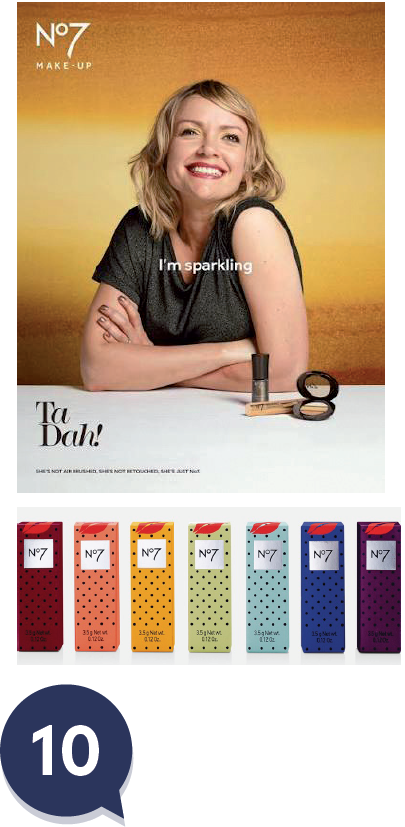
Boots No. 7
The own brand and product line with the greatest history in our Top 10 is the No.7 brand created by Boots in 1935. It was an exclusive, own brand for 86 years (in the U.K.) and made available to Target in 2004, Ulta in 2012 and today throughout Walgreens and Walmart.
Starting as a selection of eleven skin care products in the 50 largest Boots stores, and positioned as a small, affordable luxury beauty collection with an art deco design. Today there are 135 different beauty products that include skincare, targeted treatments, cosmetics and age-defying line-ups.
Boots No.7, an iconic brand that was scientific in its origin, innovative, creatively marketed, and now ever-present….a brand that for years was an exclusive, treasured own brand has become unleashed around the world.
Honorable Mention
The list of the Top 10 most iconic own brand products and brands stops here for now, and it may continue to the next top 10 in a future article. So, we will put a select set that didn’t make the list in the Honorable Mention category, one that we will build upon. They are:
TRADER JOE’S / TWO BUCK CHUCK
A&P / EIGHT O’CLOCK COFFEE
HARRODS / TEDDY BEAR
SAFEWAY / LUCERNE MILK
AMAZON / ECHO DOT
REI / HALF DOME TENT
HEB’S TEXAS-SHAPED PRODUCTS / TORTILLA
CHIPS, HASHBROWN PATTIES, PIZZA
STAPLES / EASY BUTTON
SEARS / CRAFTSMAN
The iconic own brands/products we have described have quite a few characteristics in common, as they are all memorable, distinctive and destination-builders in their own right. They have also become a defining part of each of these retailer’s DNA and personalities, developing consumer audiences that keep coming back for more. Long live these iconic [own] BRANDS!

Perry Seelert is a retail branding and marketing expert, with a passion for challenging conventional strategy and truths. He is the Strategic Partner and Co-founder of Emerge, a strategic marketing consultancy dedicated to helping Retailers, Manufacturers and Services grow exponentially and differentiate with purpose. Please contact Perry at perry@emergefromthepack.com.