


As private label reaches new heights in the United States, authentic Italian products offer retailers something increasingly valuable: provenance, differentiation and a story consumers understand. For Italian suppliers, however, producing the real thing is only the beginning. They also have to tell retailers why it matters.
Private Label in America has Entered a New Era
For decades, the simplest proposition was price: offer shoppers an acceptable alternative to a national brand for less money. Today, that definition looks increasingly obsolete. Retailers are using their own brands to communicate quality, innovation, exclusivity, discovery and even culinary authority.
The numbers demonstrate just how dramatically the market has changed. U.S. storebrand sales reached a record $282.8 billion in 2025, an increase of more than $9 billion over the previous year. Dollar sales grew 3.3 percent—nearly three times the 1.2 percent growth recorded by national brands—while store brands achieved record dollar and unit market shares of 21.3 percent and 23.5 percent, respectively.
Yet this remarkable success presents a new challenge. As virtually every major retailer expands its investment in private label, differentiation becomes increasingly difficult— and increasingly important. Competing on price alone is no longer enough. Retailers must offer products that deliver authenticity, distinctive quality and a compelling story that resonates with consumers.
For a growing number of American grocers, part of that opportunity lies thousands of miles away.
In Italy.
America has an Appetite for Italy
Italian food occupies a distinctive position with American consumers. Pasta, olive oil, sauces, cheeses, cured meats, bakery products and other Italian staples are simultaneously familiar and aspirational. They can evoke comfort and tradition while also delivering discovery, craftsmanship and premium cues.
More importantly, American demand continues to translate into substantial trade. Italian agri-food exports to the United States reached approximately $8.2 billion in 2025. Leading categories included wine, olive oil, pasta, bakery products, preserved vegetables, water, cheese, sauces, and other food preparations. Together, these categories accounted for nearly two-thirds of Italian agri-food exports to the U.S. market.
For private label retailers, however, the opportunity extends beyond simply stocking more Italian products.
It is about selling Authentic Italy.
There is an important distinction between a product that looks Italian and one genuinely produced in Italy. American supermarket shelves contain countless products employing Italian names, imagery, colors and culinary references. Some are excellent products. But they are not necessarily Italian.
That distinction creates an opportunity.
Origin has become an attribute. Place can become part of the brand proposition. Production methods, regional traditions, ingredients, certifications and the people behind a product can all provide differentiation that cannot simply be manufactured by changing a package design
For retailers building sophisticated private-brand portfolios, authenticity therefore becomes more than a geographic claim. It becomes a competitive asset.
Affordable Authencity
That proposition is particularly relevant in a market where consumers remain intensely value conscious. Value, however, is not synonymous with lowest price. The evolution of private label itself demonstrates that. Consumers increasingly accept—and often actively seek—premium, specialty and internationally sourced products carrying retailer-controlled brands. What matters is whether the experience justifies the expenditure.
Authentic Italian private label can occupy a particularly attractive space between conventional store brands and expensive specialty imports: affordable authenticity.
The retailer can provide the credibility and value equation of its own brand while the Italian producer supplies something increasingly difficult to duplicate: genuine provenance.
A new initiative from Schnucks illustrates the opportunity particularly well.
In September, the St. Louis-based retailer introduced Culinaria Italian Table, a collection of more than 40 products sourced directly from Italy, including pasta, sauces, olive oils and vinegars. Schnucks describes the collection as an “affordable indulgence”—specialty Italian food offering elevated quality without requiring a trip to a specialty store. The launch coincided with the retailer’s semiannual Taste of Italy event.
It is a telling phrase.
Affordable indulgence may be one of the most promising territories for private label today.

ITA: Connecting the Two Sides of the Shelf
Taken together, these retailers demonstrate why the role of the Italian Trade Agency is more nuanced than simply promoting Italian exports. ITA helps create connections between two sides of a market that do not always naturally understand one another.
American retailers need differentiated products, reliable supply, appropriate packaging, competitive economics and suppliers capable of operating within demanding retail systems.
Italian producers need access, market knowledge and an understanding of how American retailers buy, merchandise and build private brands. Between them sits an enormous opportunity—but also a translation challenge.
Trade missions, retailer promotions, buyer introductions, trade-show participation and educational initiatives can help close that gap. More importantly, they can expose Italian suppliers to a fundamental truth about the United States:
There is no single American grocery market. A product proposition appropriate for a premium specialty environment may require a completely different price point, pack size, merchandising strategy or story for a rural supermarket.
That brings the discussion back to the supplier.
Being Italian is Not a Sales Strategy
Italian manufacturers possess an extraordinary commercial advantage: a national food identity associated around the world with craftsmanship, tradition and culinary culture.
But “Made in Italy” cannot do all the work. Retail buyers still need to know: Why this product? Why this category? Why this price? Why our shopper? Why now?
A supplier may have been producing olive oil in Puglia for generations. A pasta company may use bronze dies and slow drying. A balsamic vinegar may come from a particular territory and production tradition. A cheese may carry a protected designation.
Those details matter—but only if they are transformed into a compelling proposition for the retailer and, ultimately, the shopper.
That means Italian suppliers need to arrive prepared not only with samples and pricing, but with a story retailers can use.
Explain the region. Explain the ingredients. Explain what makes the production process distinctive. Provide photography, video, recipes and digital content. Understand American packaging expectations. Be prepared to adapt formats and case packs. Demonstrate production capacity and supplychain reliability. Know where the product belongs within the retailer’s existing assortment.
And above all, understand the retailer.
The six ITA partner examples make the point vividly. H-E-B may be looking for products capable of creating discovery. Hy-Vee may see an opportunity within a developed Italian private-brand architecture. Schnucks may seek products that expand Italian Table. Houchens and IGA may require a proposition suited to smaller-market economics. Rouses can connect products to heritage. The Fresh Market can emphasize craftsmanship and culinary experience.
The product can be authentically Italian in every case.
The sales story cannot be identical.
The Retailers Playbook
For retailers, several principles emerge from these strategies:
Make origin visible. If the product is genuinely made in Italy, don’t hide one of its strongest differentiators on the back panel.
Build collections, not just SKUs. Pasta becomes more powerful when surrounded by sauces, oils, vinegars and complementary products that create an Italian meal solution.
Tell the producer story. Private label gives retailers ownership of the consumer relationship, but that does not mean the manufacturer should be invisible. Producer heritage can strengthen the retailer’s brand.
Turn shopping into discovery. Promotions, demonstrations, recipes, digital storytelling, events and destination merchandising transform imported food from an item into an experience.
Sell value—not simply price. Authentic Italian products may not always be the cheapest option. They don’t necessarily need to be. The objective is to make the quality, provenance and experience worth the difference.
The Real Thing
Private label’s extraordinary growth is creating opportunity, but it is also raising the competitive stakes. When retailer brands were primarily substitutes for national brands, sameness could work. In the next generation of private label, sameness is a liability.
Retailers need products their competitors cannot easily duplicate. They need stories shoppers can understand. They need reasons for consumers to walk past one shelf and stop at another.
Authentic Italian food offers all three.
For Italian manufacturers, however, the opportunity comes with responsibility. Tradition must be translated into relevance. Provenance must become a retail proposition. Exceptional products must be supported by exceptional storytelling and the operational capabilities American retailers require. That may ultimately be the most important lesson from the growing relationship between Italian suppliers, ITA and American retailers. Authenticity may open the door. Retail readiness gets the product through it.
And in a marketplace crowded with products trying to look Italian, perhaps the most powerful competitive advantage of all is remarkably simple:
Be the real thing.
One Country, Seven Retail Strategies
Perhaps the clearest evidence of the opportunity comes from the very different ways U.S. retailers are approaching Italian food.
The Italian Trade Agency’s Chicago Office works with major U.S. supermarket chains and retailers to help connect them with authentic Italian products and suppliers. What is particularly revealing about its retailer partnerships is that there is no single formula. Six retailers illustrate six very different routes to the American consumer.
H-E-B: Create a Destination
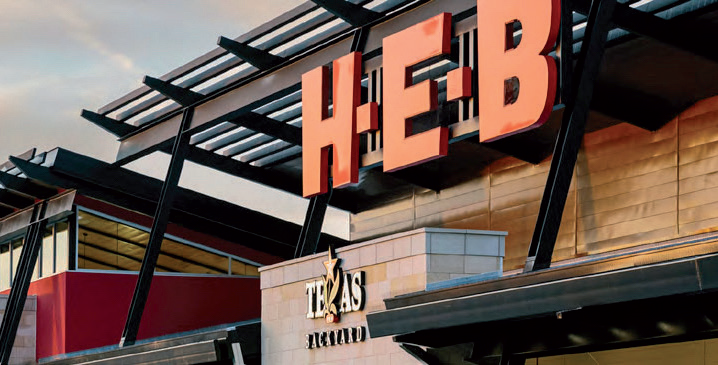
At H-E-B, one of America’s most sophisticated privatebrand retailers, Italian products exist within a broader culture of differentiation.
The retailer and its Central Market banner carry a wide assortment of authentic Italian foods, supported by a resident buyer in Europe. H-E-B has also developed an Authentic Italian digital presence featuring product information, recipes and videos, while its year-long, e-commerce! promotion extends the experience through advertising, social media, product demonstrations and consumer education.
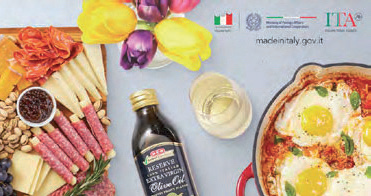
That matters because H-E-B demonstrates what happens when imported food is treated not simply as merchandise but as a destination.
The retailer’s private brands are fundamental to its identity, with the ITA retailer profile estimating privatebrand share at approximately 30 percent. For suppliers, that creates both opportunity and expectation: a product must contribute to a retail experience, not merely occupy a shelf.

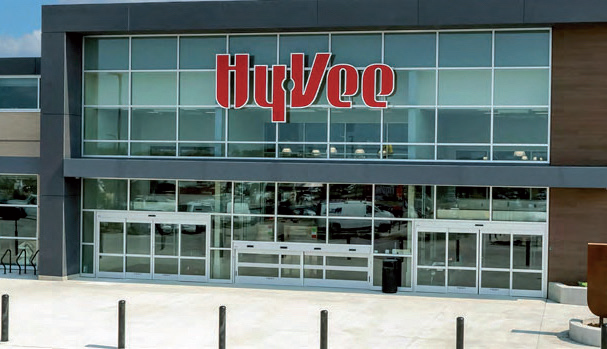
Hy-Vee: Build Authenticity into the Brand
Hy-Vee provides another model.
Its Gustare Vita brand has made authentic imported Italian products—including pasta, olive oil and sauces—a recognizable part of the retailer’s international private-label strategy. Hy-Vee supports its Italian proposition with two major annual promotions, Imported from Italy merchandising, online content, recipes, sweepstakes, demonstrations and store events. Italian sourcing is also extending into newer private-brand development. According to ITA’s retailer research, Hy-Vee’s Nothing But The Truth line includes numerous authentic Italian items.
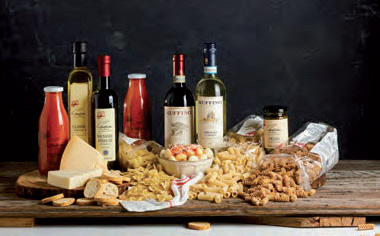
The lesson is significant. Italy is not merely the theme of an occasional promotion. Origin can become embedded within the retailer’s brand architecture.

Schnucks: Turn Promotion into a Platform
Schnucks represents perhaps the clearest evolution of the strategy.
The retailer has been a longtime ITA partner, runs an annual Taste of Italy promotion and has sent buyers to Italy. Now it has taken the next step by turning that interest into a dedicated authentic Italian private-brand platform.
Its Culinaria Italian Table range transforms “Made in Italy” from an event into an ongoing retail proposition. The line sits within Culinaria, Schnucks’ premium private brand, and establishes Italian provenance as a reason for shoppers to trade up.
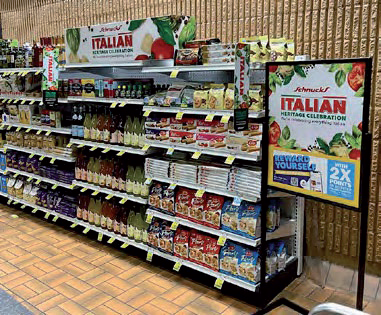
That progression—from promotion, to sourcing relationship, to proprietary product platform—is particularly relevant to Italian manufacturers hoping to build durable U.S. business.
Houchens/IGA: Take Authenticity Beyond the Big City
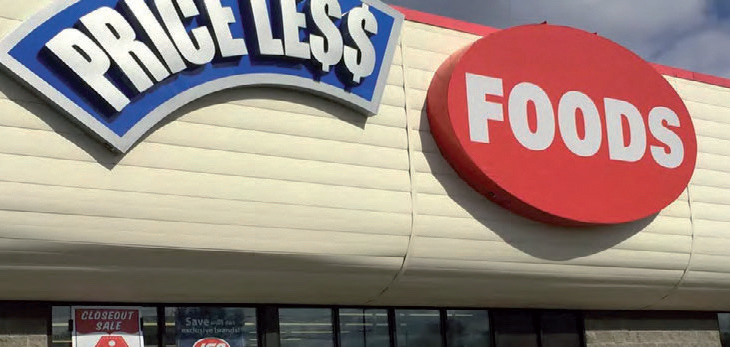
One of the more intriguing examples comes from Houchens Food Group.
Houchens became an ITA Partner Retailer in 2025 and has increased the presence of authentic Italian products across its stores. As a major IGA operator, it has also introduced the IGA Merchant’s Choice That’s Italy range and participated in the development and launch of the program. Why is that important?
Many Houchens stores operate in smaller and more rural markets—precisely the locations that might once have been considered less obvious destinations for premium imported Italian food.
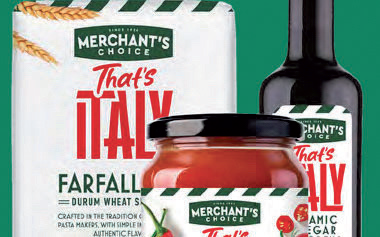
The initiative suggests that authentic Italian products need not be confined to upscale metropolitan specialty retailers. If the assortment, price architecture and distribution model are right, provenance can resonate in smaller markets as well. For Italian suppliers, that potentially expands the map of opportunity considerably.

Rouses: Make Heritage Part of Retail Identity
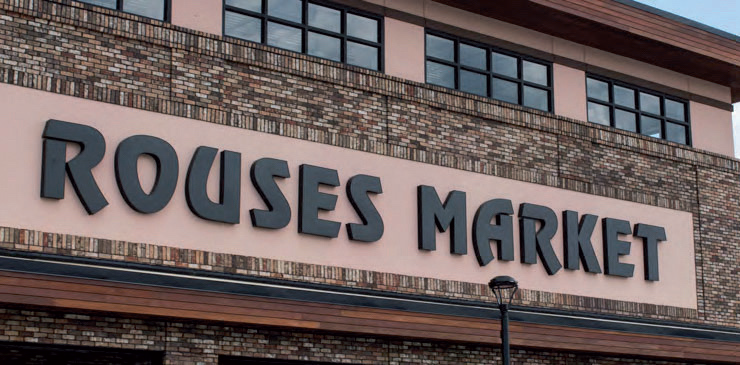
At Rouses Markets, Italian authenticity connects naturally with the retailer’s own heritage and the culinary culture of the Gulf Coast.
The Rouse family has roots in Sardinia, while New Orleans and the surrounding region have a deep Italian-American food tradition. The retailer has worked with ITA since 2017 and emphasizes authentic Italian cuisine through products, promotions, recipes, videos and events.
Rouses’ private-brand program is smaller than those of some national and large regional competitors, but it is strategically used to reinforce the retailer’s identity. Its own-brand sourcing philosophy emphasizes authentic global producers, with Italian products playing a particularly visible role. This is a different kind of advantage: authenticity becomes personal.
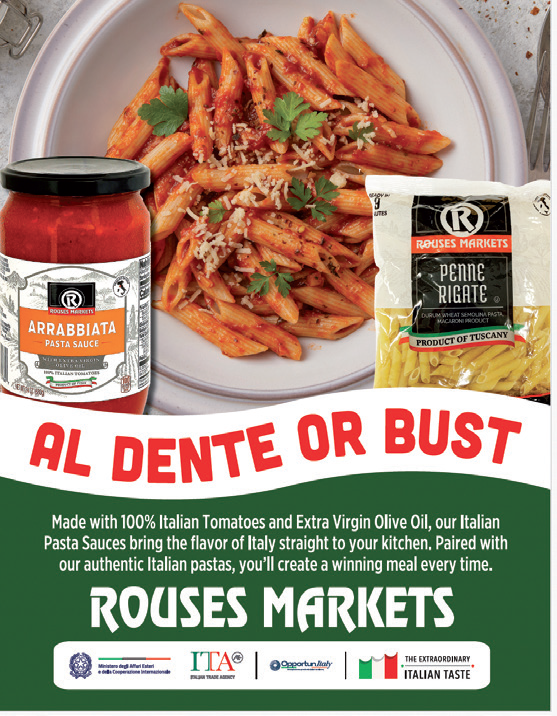
The retailer isn’t simply telling shoppers where a product came from. It is connecting the product’s origin to its own story.

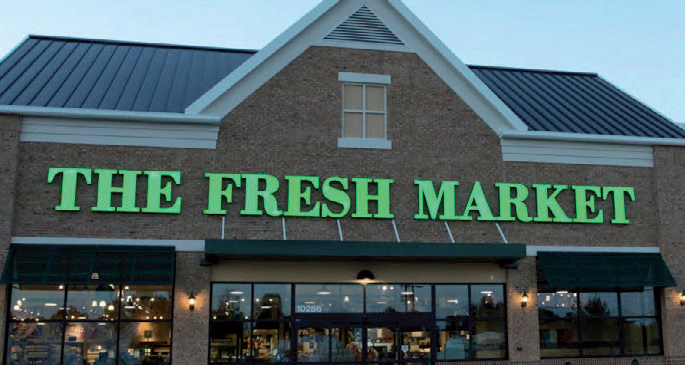
The Fresh Market : Curate the Experience
The Fresh Market offers yet another interpretation. Its smaller, high-touch stores were inspired by European fresh markets, making authentic Italian food a natural fit. An ITA retailer partner for the past two years, the company supports Italian cuisine through The Flavors of Italy, a digital destination featuring recipes, product information, entertaining ideas and authentic Italian products. It has also run multi-month promotions and a dedicated Taste of Italy livestream.
The retailer’s private-brand strategy emphasizes premium and artisanal products, including numerous items imported from Italy.
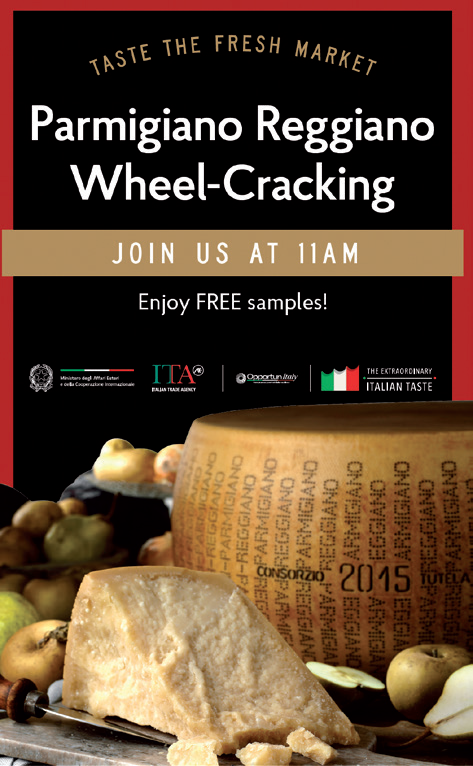
Here the lesson is curation.
The Fresh Market isn’t trying to replicate the assortment of a conventional supermarket. Italian products help reinforce the experience the retailer already promises its customers.


World Market: Make Italy part of the Discovery
World Market offers a different route to the American consumer.
Founded in San Francisco in 1958, the retailer has built its identity around discovery, combining artisan goods, furniture and home décor with an eclectic assortment of international foods. That makes authentic Italian products a natural fit: shoppers already enter World Market expecting to find products they may not encounter at a conventional supermarket.
World Market became an ITA Retailer Partner in 2024 and carries a broad assortment of imported gourmet foods, with authentic Italian products playing an important role. Its dedicated Italian Foods digital presence extends that experience online, while promotions turn Italian food into an event. In May 2026, for example, its Festa Italiana promotion rewarded customers for purchases from the retailer’s Little Italy Shop.
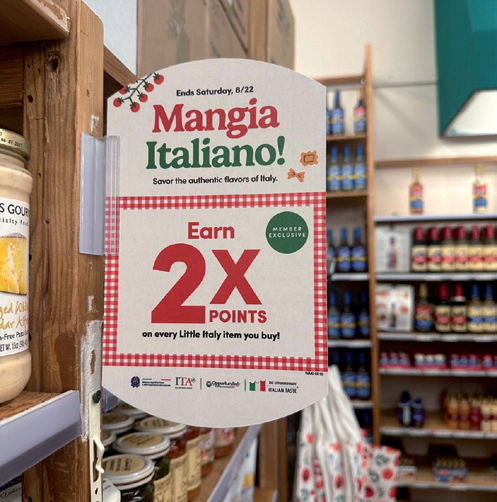
The retailer’s private-label strategy is relatively selective. The World Market name appears on some food products, including items imported from Italy, while the assortment also includes brands and products that may be difficult to find elsewhere.
For Italian suppliers, that distinction is important. World Market is looking for more than another pasta, sauce or olive oil. Products that are unique, interesting, premium and genuinely rooted in Italy can become part of the retailer’s larger promise of international discovery.
Here, authenticity does more than establish provenance. It gives shoppers something to discover.